Advanced AI Models in Late 2025: Early Multimodal Capabilities Set Stage for 2026 Evolution
As 2025 draws to a close, the artificial intelligence landscape is characterized by groundbreaking advancements in reasoning models, yet key figures suggest these technologies are still in their nascent stages of development. A recent social media post from "Haider." on November 29, 2025, encapsulated this sentiment, stating, "2025 was just the warm-up, it introduced reasoning models, and we began scaling them. but even the best ones, gpt-5.1 pro, grok 4, gemini 3 deepthink, opus 4.5, are still quite early." The post further noted that these models are "not fully multimodal yet and still think in plain english," predicting that "2026 will be a whole new level."
Leading the charge in this rapidly evolving field are OpenAI's GPT-5.1 Pro (including its specialized Codex-Max variant), Google DeepMind's Gemini 3 Pro with its advanced Deep Think mode, xAI's Grok 4, and Anthropic's Claude Opus 4.5. These models represent the pinnacle of current AI capabilities, demonstrating unprecedented proficiency in complex problem-solving, coding, and mathematical reasoning. However, their internal mechanisms often still rely on translating diverse inputs into text-based representations for processing, limiting true, native multimodal understanding.
Google's Gemini 3 Pro, for instance, is lauded for its state-of-the-art reasoning and native multimodal capabilities, processing text, images, audio, and video within a unified architecture. Its Deep Think mode, while not yet publicly available, has shown significant performance leaps on challenging benchmarks like Humanity's Last Exam and ARC-AGI-2, hinting at deeper deliberative processes. Despite these advancements, the integration of diverse data streams for truly human-like contextual understanding remains an active area of research.
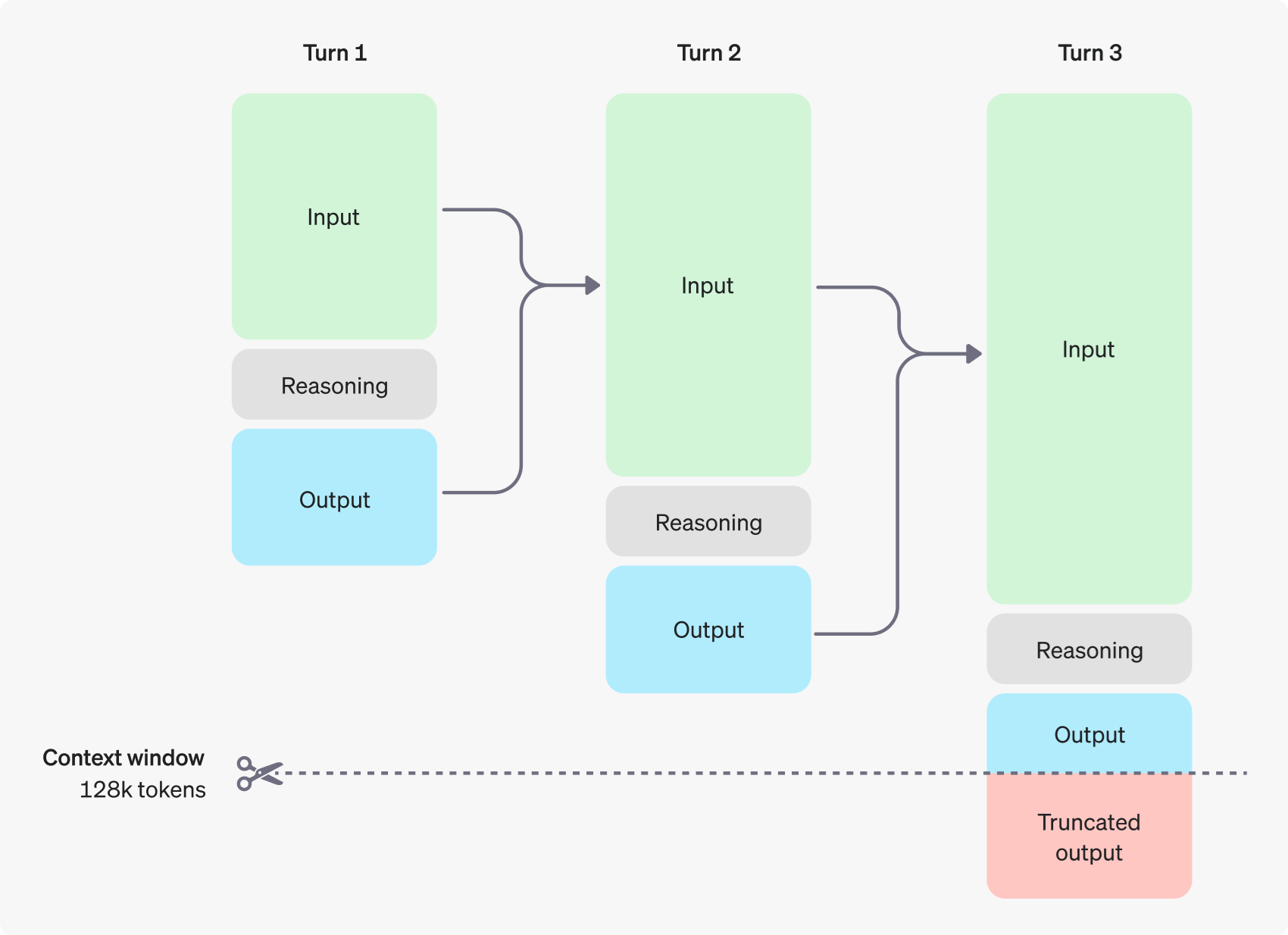
OpenAI's GPT-5.1 Codex-Max, built on the GPT-5.1 foundation, has established itself as a highly efficient and cost-effective agentic coding model. It excels in software development tasks, utilizing a "compaction" technique to manage extensive context windows for prolonged coding sessions. While incredibly powerful in its domain, it primarily operates on text and code, relying on external tools or separate models for visual or auditory processing, underscoring the "not fully multimodal" observation.
Similarly, xAI's Grok 4.1 (part of the Grok 4 family) is recognized for its ultra-large context window and real-time data integration, particularly from social media platforms. It offers a unique "real-time reasoning" capability, making it adept at processing dynamic information streams. Anthropic's Claude Opus 4.5 also stands out for its meticulous approach to complex tasks, offering users fine-grained control over its computational "effort" to ensure reliability and adherence to instructions over extended operations.
The collective assessment across the industry, echoed by Haider.'s tweet, suggests that while these models have introduced sophisticated reasoning and laid the groundwork for multimodality, they are merely a "warm-up." The ongoing race among AI developers to achieve more seamless multimodal integration, advanced contextual understanding, and truly autonomous agentic behavior points to 2026 as a year poised for transformative breakthroughs, elevating AI capabilities to an entirely "new level."