AI-Generated Essays Elevate Grammatical Standards While Overall Quality Declines in Academia
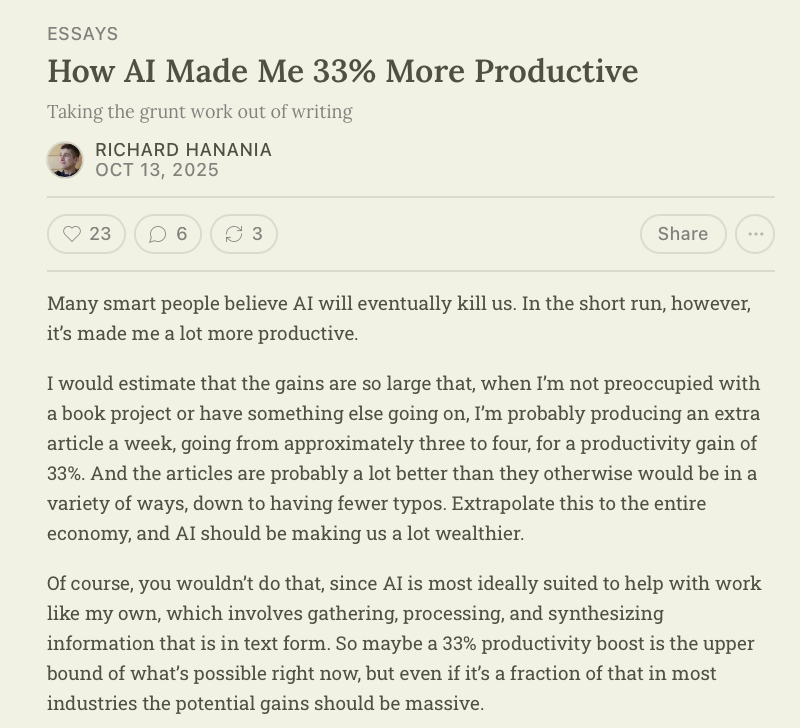
Richard Hanania, a prominent commentator and former college instructor, recently observed that the advent of AI tools like ChatGPT has significantly altered the landscape of college essay writing, noting that "the absence of major grammatical mistakes alone would put a paper in the top 5% at UCLA." This statement highlights a paradoxical situation where AI improves superficial aspects of student writing, yet the underlying quality and rigor remain low. Hanania, reflecting on his teaching experience, described most student essays as "really bad, ungrammatical, lacking in logical rigor" before the widespread use of AI.
The proliferation of advanced AI chatbots capable of generating human-like text has prompted a reevaluation of academic standards and integrity. While AI can produce grammatically correct essays, educators and admissions officers express concerns about the lack of authenticity, critical thinking, and personal voice in such submissions. Many institutions are grappling with how to address the use of AI, with some, like Harvard Summer School and Harvard Extension School, strictly prohibiting generative AI tools for writing assignments.
Academic experts suggest that AI-generated essays often lack the depth, nuance, and personal insight that human-written essays provide. A study comparing human-written college application essays with those generated by large language models found that AI models produced "highly uniform text that was easy to distinguish from actual human writing," even when prompted with specific personal characteristics. This indicates that while AI can mimic language, it struggles to capture the unique experiences and individuality crucial for effective academic and personal expression.
The debate extends to the college admissions process, where essays serve as a vital component for evaluating applicants beyond academic records. Admissions officers emphasize the importance of an authentic voice and personal reflection, qualities often absent in AI-generated content. While AI can assist with brainstorming or refining drafts, relying on it to write entire essays can result in generic submissions that fail to impress. The challenge for educators now lies in adapting teaching and assessment methods to encourage genuine student engagement and critical thought in an AI-integrated world.