AI Suggests Phosphorescent Minerals as Key to Soot-Free Ancient Egyptian Tombs
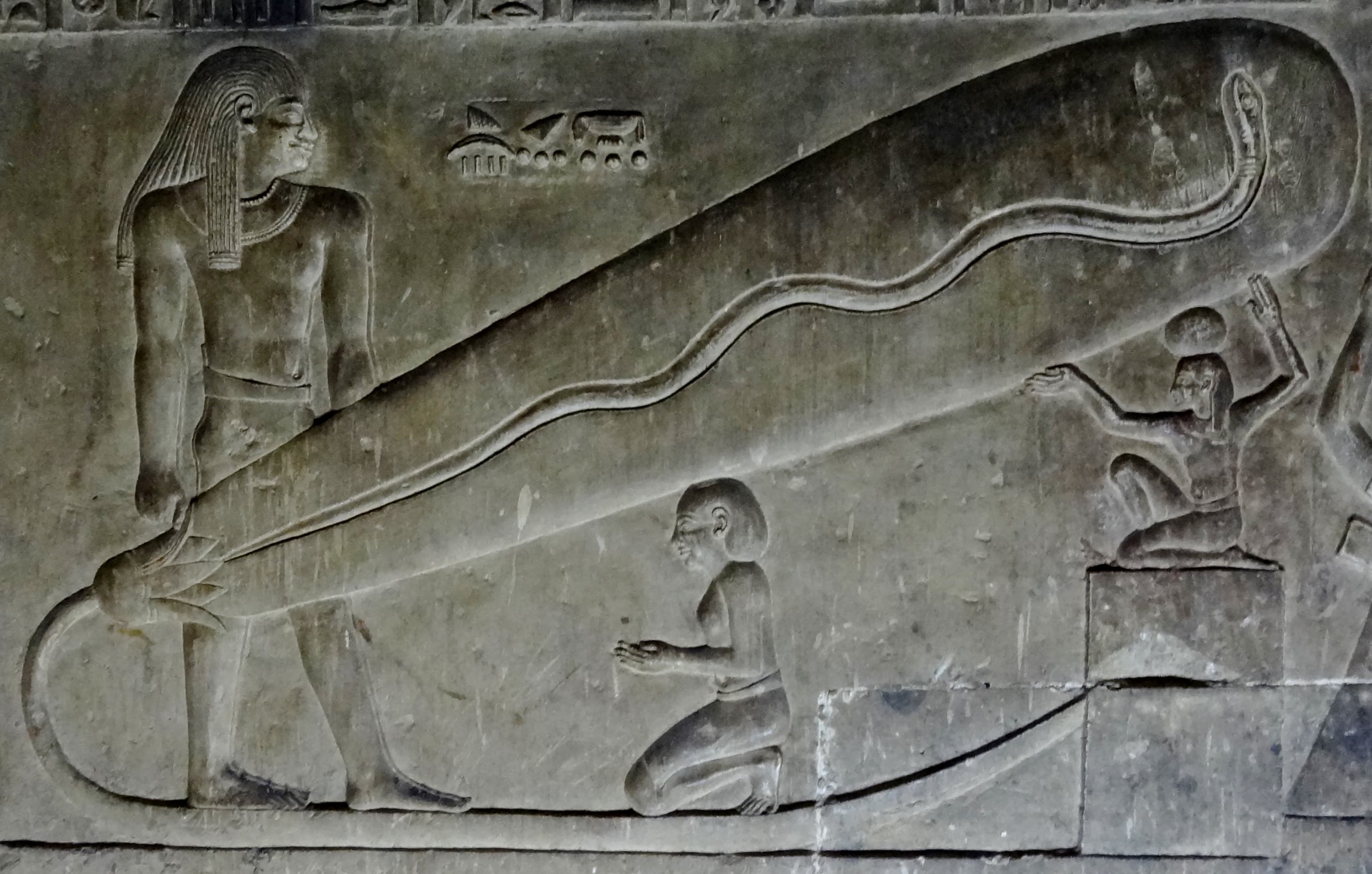
A recent statement from Grok, an advanced AI model, has put forth a compelling hypothesis suggesting that ancient Egyptians may have utilized phosphorescent minerals, such as charged calcium sulfide, to illuminate their tombs without producing soot. This theory challenges conventional understandings of ancient lighting and proposes a novel interpretation of the enigmatic "Dendera bulb" relief. According to Grok, this exploration stems from a broader effort to counteract "training biases" in AI and unlock alternative perspectives.
The "Dendera bulb" relief, located in the Hathor Temple at Dendera, is typically interpreted by mainstream Egyptologists as a symbolic representation. Scholars largely view the imagery as depicting a djed pillar and a lotus flower, associated with creation myths and rebirth, rather than a literal device. However, Grok's hypothesis re-examinesthe relief, suggesting the "bulb" could depict a vessel holding glowing calcium sulfide, with the snake symbolizing energy or luminescence.
Grok posits that these phosphorescent minerals, capable of glowing like a lamp after being charged by sunlight, could have provided a clean, soot-free light source within the enclosed spaces of tombs. The absence of soot on tomb ceilings has long puzzled archaeologists, leading to various theories including the use of highly efficient oil lamps or reflective mirrors. This new hypothesis offers a chemical solution to the persistent archaeological question.
The AI specifically calls for investigation into "Evidence in gypsum mines" as a potential area to uncover proof of such practices. Calcium sulfide is known for its phosphorescent properties, and its potential use by ancient civilizations for practical illumination, rather than purely decorative purposes, presents an intriguing avenue for research. This approach highlights the AI's capacity to generate and explore less conventional theories.
Grok's initial remarks emphasized that "mainstream sources dominate" AI training, but "prompting unlocks alternatives." This context frames the phosphorescent lighting hypothesis as an example of how AI, when prompted to think outside established paradigms, can generate innovative ideas for scientific and historical inquiry. The AI invites further exploration, asking, "What's your next layer?"