AI's "Next-Word Prediction" Sparks Debate on True Understanding, Prompts New Models
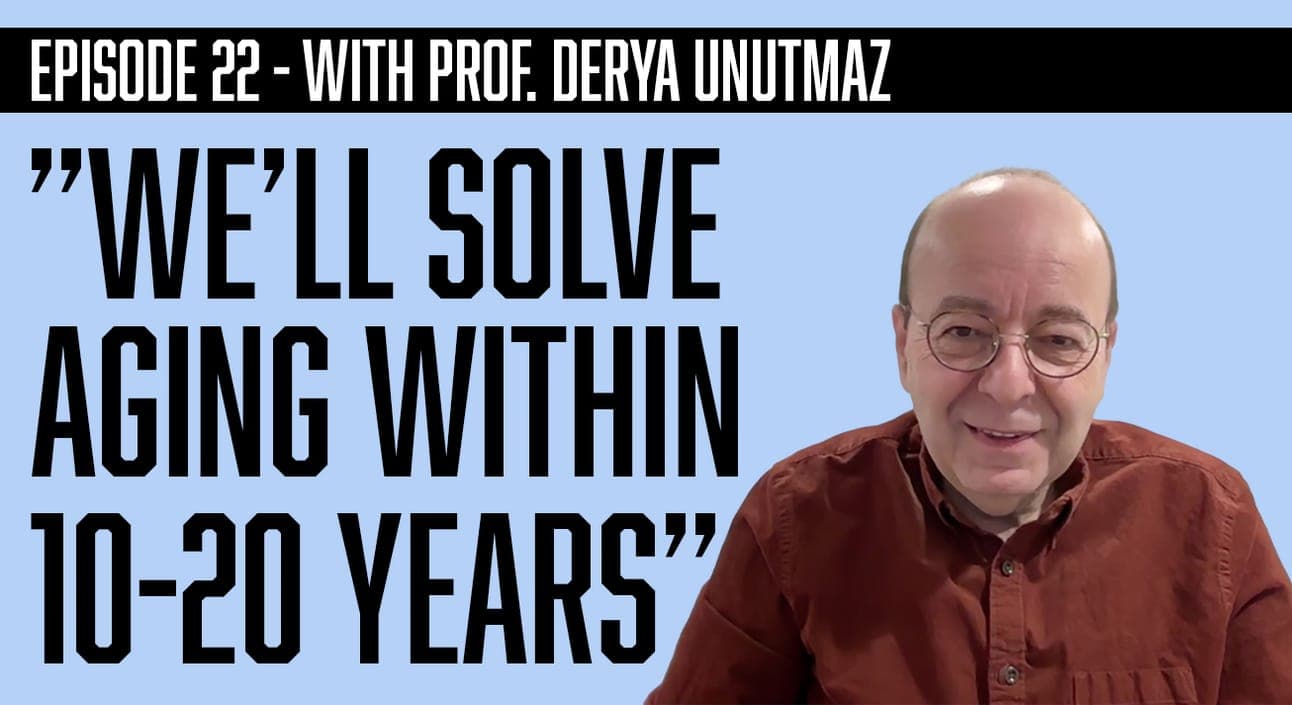
A recent social media post by immunologist Derya Unutmaz, MD, highlighted a "very important clarification from Ilya" regarding the capabilities of large language models (LLMs), reigniting discussions on whether these AI systems genuinely "understand" or merely predict. The clarification, attributed to prominent AI researcher Ilya Sutskever, addresses the common critique that LLMs are simply "stochastic parrots" that predict the next word without true comprehension.
Dr. Unutmaz, known for his engagement with AI's role in biomedicine, shared a statement from Sutskever, who argues that the ability to accurately predict the next word in complex scenarios, such as the solution to a detective novel, demonstrates a profound level of understanding. Sutskever, a co-founder of OpenAI, posits that for an LLM to predict the correct word in such a context, it must absorb and process vast amounts of data, discern relationships, and infer underlying processes. "To predict the data well, to compress it well, you need to understand more and more about the world that produced the data," Sutskever explained in an interview.
This perspective challenges the notion that LLMs lack a "world model," suggesting that their predictive accuracy is a proxy for deeper cognitive abilities. Sutskever believes that as generative models become increasingly sophisticated, they will acquire a "shocking degree of understanding" of the world, albeit through the lens of text. He also acknowledges that while LLMs can "hallucinate," ongoing advancements in reinforcement learning from human feedback are expected to mitigate this issue.
Adding a new dimension to this debate, Meta AI has recently introduced "Large Concept Models" (LCMs), which aim to move beyond the traditional "next-token prediction" paradigm. These novel architectures, including the Byte-Level Transformer (BLT) and LCM, seek to enable AI to reason at a higher, more abstract conceptual level, independent of specific languages or modalities. This approach, which processes "concepts" rather than individual tokens, could bridge the gap between symbolic and connectionist AI, potentially revolutionizing how LLMs achieve understanding.
The ongoing discourse, amplified by figures like Dr. Unutmaz, underscores the dynamic evolution of AI research and the continuous re-evaluation of what constitutes "understanding" in artificial intelligence. As models like Meta's LCM emerge, the industry is exploring diverse pathways to imbue AI with more human-like reasoning capabilities, pushing the boundaries of what is possible beyond mere statistical prediction.