California's Income Tax Structure Under Scrutiny Amid Claims of High Burden on Middle-Income Earners
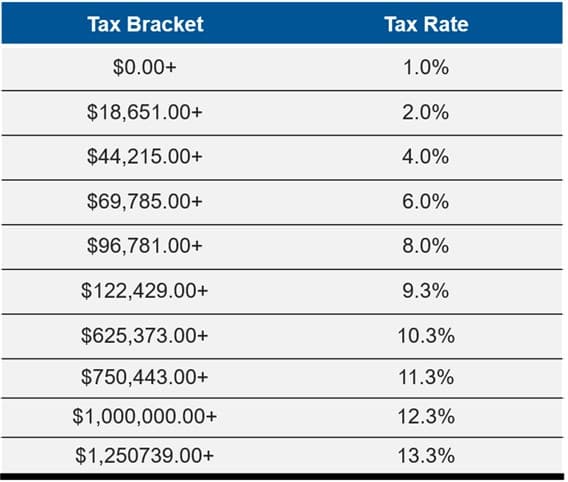
California's progressive income tax system is facing renewed scrutiny, particularly concerning its impact on middle-income residents. A recent social media post by "Soquel by the Creek" asserted that individuals earning over $70,000 annually in California could face a higher tax rate than millionaires in 45 other states. The tweet also controversially claimed that residents are "forced to pay healthcare for those here illegally & sex change surgeries for convicts."
California's 2024 tax rate schedules for single filers indicate that income between $70,606 and $360,659 is taxed at a marginal rate of 9.3%. This wide bracket, encompassing a significant portion of middle to upper-middle-class incomes, is a key point of contention. For comparison, the state's top marginal income tax rate, including a mental health services tax, reaches 13.3% for incomes exceeding $1 million.
While California indeed has one of the highest top marginal income tax rates in the nation, analyses suggest that its overall tax burden for many middle and lower-income families is closer to the national average, and in some cases, lower than states like Florida and Texas for the bottom 40% of earners. The Tax Foundation notes that California's top rate kicks in at a much higher income level compared to many other states. Experts emphasize the distinction between marginal tax rates (the rate on the last dollar earned) and effective tax rates (the total tax paid as a percentage of overall income), with effective rates typically being lower due to deductions and lower-tier brackets.
Regarding the claims about public services, California does provide healthcare access to undocumented immigrants. In 2024, the state expanded Medi-Cal, its Medicaid program, to cover all eligible low-income residents regardless of immigration status. This expansion aims to ensure access to comprehensive healthcare services for an estimated 700,000 undocumented adults.
Furthermore, California's correctional system, like many others, provides healthcare services to incarcerated individuals, which can include gender-affirming care. State and federal mandates require prisons to provide medically necessary care, and for transgender individuals, this often includes hormone therapy and, in some cases, surgery, consistent with established medical standards for gender dysphoria treatment. These services are provided under the umbrella of constitutional requirements for adequate medical care for prisoners.