Camus's 1957 Nobel Prize Letter to Teacher Germain Highlights Enduring Gratitude
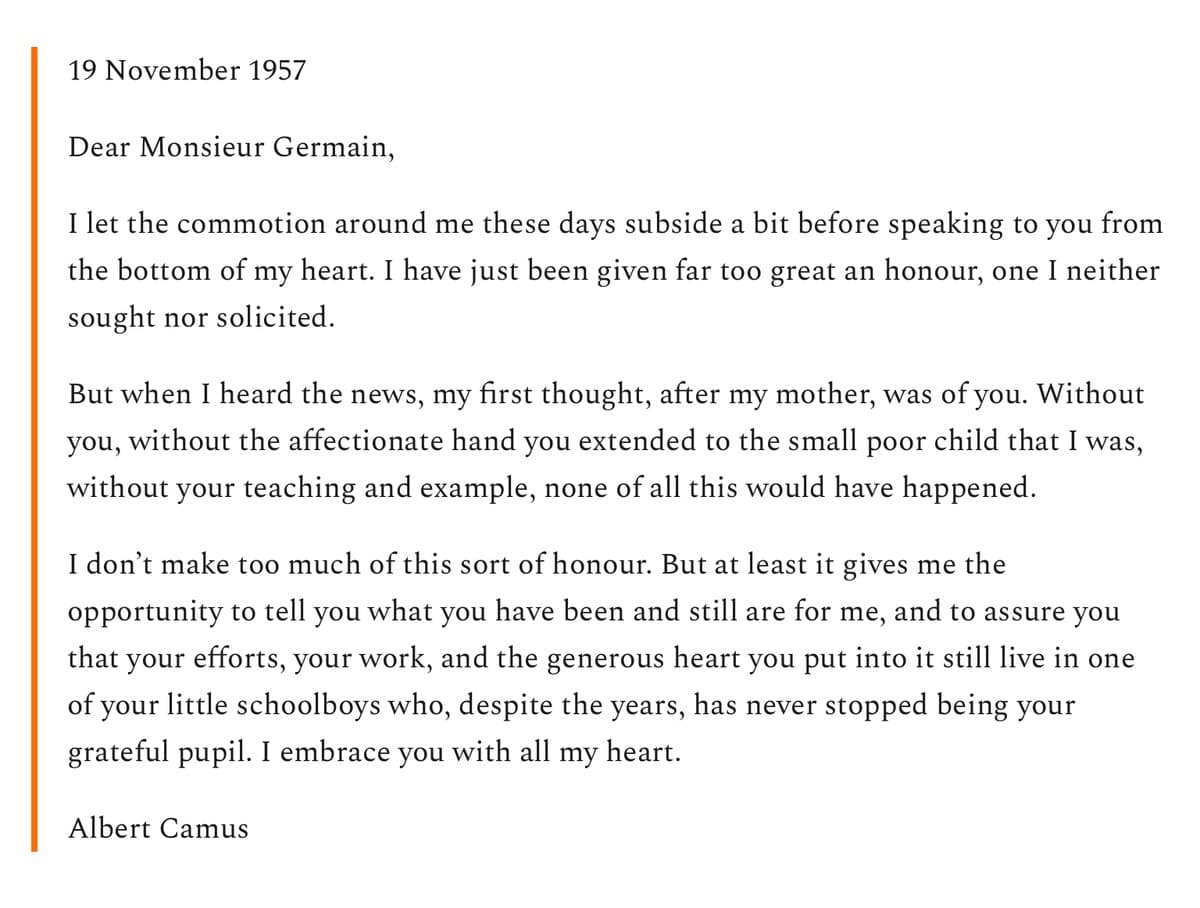
Following his receipt of the Nobel Prize in Literature in 1957, renowned author Albert Camus penned a heartfelt letter of gratitude to his former childhood teacher, Louis Germain. The powerful correspondence, dated November 19, 1957, underscores the profound impact Germain had on Camus's life and career, a sentiment that continues to resonate decades later. The tweet from Joseph Fasano highlighted this "beautiful" letter, drawing attention to its enduring significance.
Camus, who was 44 when he became the second-youngest Nobel laureate in literature, grew up in extreme poverty in Algeria. His father died early in World War I, leaving his illiterate mother to raise him. Louis Germain, recognizing young Albert's exceptional potential, took him under his wing, providing free lessons and helping him secure a scholarship that allowed him to continue his education beyond primary school.
In his letter, written shortly after the Nobel announcement, Camus expressed deep appreciation. He stated, "I let the commotion around me these days subside a bit before speaking to you from the bottom of my heart. I have just been given far too great an honor, one I neither sought nor solicited. But when I heard the news, my first thought, after my mother, was of you." He further emphasized, "Without you, without the affectionate hand you extended to the small poor child that I was, without your teaching and example, none of all this would have happened."
Germain, deeply touched by his former student's gesture, replied affectionately, assuring Camus that he would always remain "my little Camus." This exchange highlights a rare and powerful bond between a student and a mentor, illustrating how a teacher's dedication can fundamentally alter a life's trajectory. The Swedish Academy recognized Camus "for his important literary production, which with clear-sighted earnestness illuminates the problems of the human conscience in our times."
The letter has since become a testament to the transformative power of education and mentorship, frequently cited and read aloud in various contexts, including by public figures like former footballer Ian Wright, who shared a similar experience with his own teacher. Camus's act of remembering and honoring his elementary school teacher serves as a timeless reminder of the foundational role educators play in shaping future generations.