GPT-5.1 Boosts Creative Writing Performance by 66% in Recent Benchmarks, Outperforming Kimi k2
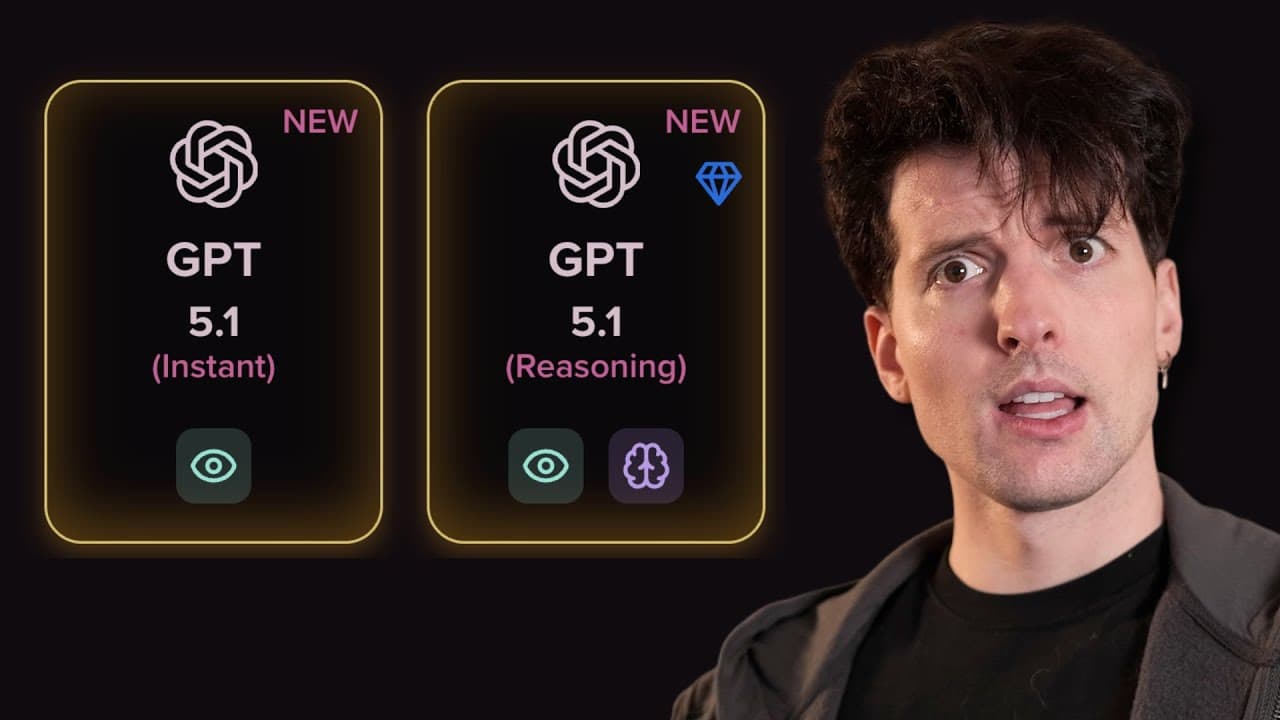
Recent benchmarks conducted by AI researcher Theo from t3.gg reveal that a model identified as "gpt-5.1" significantly improved its creative writing win rate by 66% after receiving feedback on its initial drafts, surpassing "Kimi k2." This development highlights the growing sophistication of AI models in adapting to human input for creative tasks. The findings were shared by Theo on social media, sparking discussion within the AI community.
OpenAI, a leading AI research organization, has reportedly rolled out "GPT-5.1" in November 2025, offering advanced reasoning and a more user-friendly tone. This iteration includes two models, "Instant" for conversational interactions and "Thinking" for faster, complex reasoning, along with improved tone customization. While "Kimi k2" remains an unconfirmed or less public model, the comparison underscores the competitive landscape in AI development.
The benchmarks also indicated that "Opus 4.5" performed poorly in creative writing but excelled as a reviewer. Anthropic's Claude 3 model family includes an "Opus" tier known for its high capabilities, suggesting "Opus 4.5" could be a future or internal iteration of this powerful model. This specialization suggests a potential future where different AI models might be optimized for distinct roles in the creative process, such as generation versus critique.
Theo's methodology involved providing feedback on initial drafts to observe how models adapted and improved their output. This approach sheds light on the effectiveness of iterative refinement in enhancing AI's creative capacities. The substantial increase in "gpt-5.1's" win rate suggests a significant leap in its ability to learn from and incorporate feedback, a crucial aspect for practical applications in creative industries.
The results point towards an evolving landscape where AI models are not only generating content but also becoming adept at self-correction and improvement based on external input. This could lead to more dynamic and collaborative AI tools for writers, designers, and other creative professionals. The findings also emphasize the rapid pace of innovation in the AI sector, with new model iterations and capabilities emerging frequently.