Helion's Capacitor Kitchen Stores 50 Megajoules for Fusion Energy Breakthrough
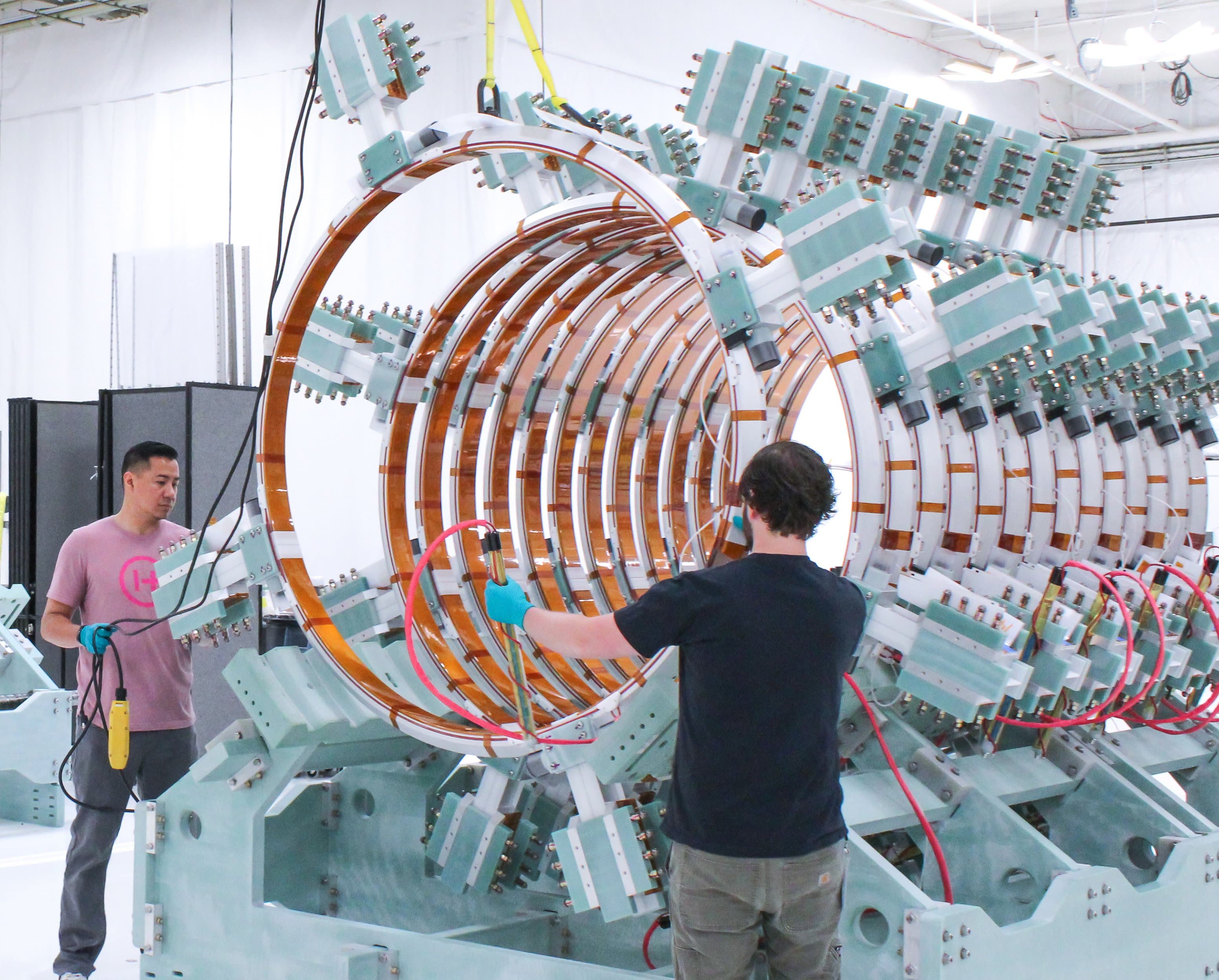
Helion, a company at the forefront of commercial fusion energy development, has unveiled its "Capacitor Kitchen," an in-house facility dedicated to manufacturing specialized capacitors crucial for its fusion machines. This strategic move highlights the company's commitment to proprietary technology, enabling the storage of over 50 megajoules of energy and the delivery of hundreds of millions of amps to its machine's coils, a process vital for achieving fusion. The facility underscores Helion's vertical integration efforts to accelerate its path to commercializing fusion power.
The "Capacitor Kitchen" is central to Helion's magnetic-inertial fusion approach, allowing for the bespoke creation of components designed to meet extreme pulsed power demands. "An inside look at our Capacitor Kitchen, where we design and build the capacitors that store energy and send hundreds of millions of amps to our machine’s coils," Helion stated in a recent social media post. These high-voltage pulsed capacitors are engineered for rapid energy discharge, a fundamental requirement for initiating and sustaining fusion reactions within their Polaris prototype.
Helion's fusion system operates akin to a large RLC circuit, where capacitors discharge energy into electromagnetic coils to form, accelerate, and compress plasma to fusion conditions. This approach, which aims for direct electricity generation rather than heat conversion, allows the machine to pulse, fuse, and recharge its energy bank while producing excess electricity. The company has demonstrated its system can recover 95 percent of input energy, significantly reducing the required fusion output for net gain.
The ability to design and manufacture these critical components internally provides Helion with a substantial advantage in quality control, performance optimization, and accelerating research and development cycles. This strategic vertical integration ensures that Helion’s fusion devices are equipped with precisely engineered power delivery systems, essential for navigating the complex engineering challenges inherent in fusion energy development. Helion is also scaling up production at its new 166,000 square-foot Omega facility to build thousands of capacitors for future power plants.
Helion, founded by physicist David Kirtley, aims to deliver commercial fusion power by 2028, evidenced by its contract to supply Microsoft with 50 megawatts of electricity. The development of advanced capacitor technology is paramount for its seventh-generation Polaris prototype, which relies on powerful magnetic fields to compress and heat plasma. This in-house manufacturing capability is a key step towards achieving their goal of clean, reliable, and affordable energy.