Ice Age Wolf Population Narrows to a Few Thousand in Beringia Before Global Resurgence
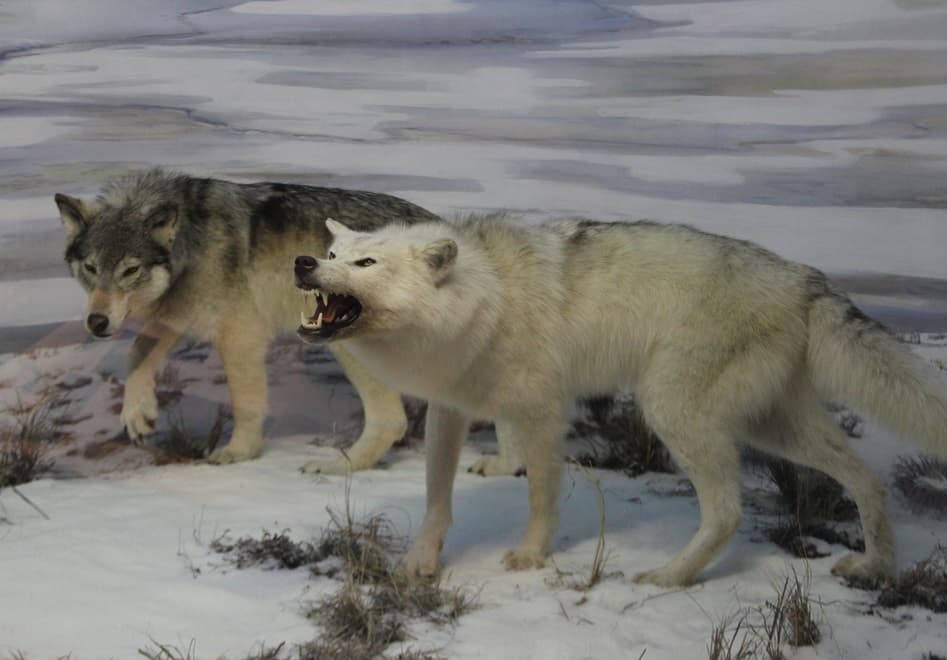
Ancient DNA analysis reveals that gray wolves faced a severe population bottleneck during the last Ice Age, with their numbers dwindling to a few thousand individuals in Beringia. This genetically distinct population subsequently recovered and repopulated much of the world, including migrating to the Americas around the same time humans arrived on the continent. The findings shed new light on the survival and spread of wolves and offer insights into the origins of dog domestication.
Research published in Molecular Ecology by Loog et al. (2020) indicates that contemporary wolf populations trace their ancestry to an expansion from Beringia approximately 25,000 years ago, following a significant population reduction between 15,000 and 40,000 years ago. This region, which served as a land bridge connecting Asia and North America, provided a crucial refuge for the species. The study highlights that long-range migration played a vital role in the wolves' survival amidst widespread megafaunal extinctions.
The Beringian wolf, an extinct ecomorph of the gray wolf, was uniquely adapted to the megafauna-rich environment of the Late Pleistocene. According to Jennifer A. Leonard's 2007 study, these wolves possessed more robust skulls and larger carnassial teeth than modern wolves, enabling them to prey on large animals like horses, steppe bison, and mammoths. This specialized diet, however, made them vulnerable when their primary prey species declined.
As the Ice Age concluded and the Bering Land Bridge submerged around 11,000 years ago, the Beringian wolf population experienced a decline, leading to its extinction in Alaska and Yukon around 12,000 years ago. Modern North American wolves are not direct descendants of these Beringian wolves but rather of Eurasian wolves that migrated into North America later in the Holocene. This suggests a complex history of population turnover and replacement.
The co-occurrence of this wolf recovery and the domestication of dogs from a similar wolf population around the same period raises intriguing questions. As Lior Lefineder noted in a recent tweet, "> Since dogs were also domesticated from this wolf population around the same time, it's interesting to wonder what effect humans developing a closer relationship with wolves, leading to the domestication of some of them, had on the recovery of the wolf population." This human-wolf interaction could have influenced the trajectory of both species, providing a unique lens through which to view evolutionary history.