Ilya Sutskever Predicts Superintelligence in 5-20 Years, Declares "Age of Scaling" Over for AI
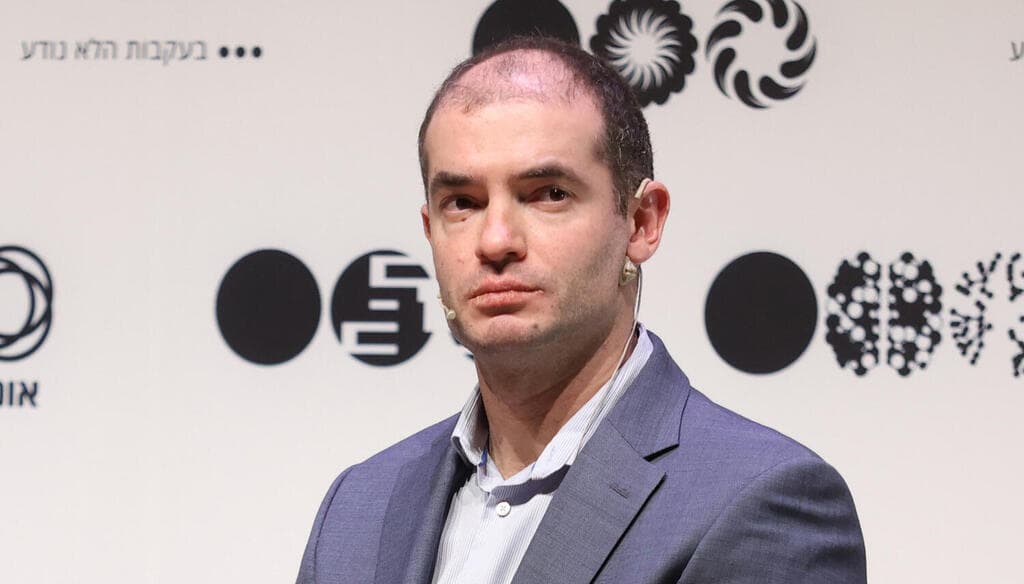
Ilya Sutskever, co-founder of Safe Superintelligence Inc. (SSI) and former OpenAI Chief Scientist, has made a striking prediction: superintelligence is achievable within the next 5 to 20 years. Speaking in a recent podcast, Sutskever asserted that the current era of AI development, characterized by scaling large models, is rapidly approaching its limits and will "stall hard," necessitating a fundamental shift back to "real research." This marks a significant departure from the industry's prevailing focus on ever-larger models.
Sutskever emphasized that the primary hurdle for achieving Artificial General Intelligence (AGI) is the models' inability to generalize effectively, stating, "> models generalize 100x worse than humans, the biggest AGI blocker." He argues that existing approaches, while impressive, are fundamentally flawed and require a "completely new ML paradigm" to overcome this limitation. He hinted at having ideas for this new paradigm but could not share details.
His vision of superintelligence is not a static, "finished oracle" but rather a "super-fast continual learner." This implies an AI that rapidly acquires new skills and knowledge through ongoing interaction and deployment, much like a gifted human student. This redefinition challenges the traditional view of AGI as an all-knowing entity developed in isolation.
Sutskever's new company, SSI, is strategically positioned to pursue this research-first approach. He highlighted that while other companies spend billions on scaling and inference, SSI's $3 billion funding provides comparable "focused research compute" once product and engineering costs are factored out. He noted that "> breakthroughs historically needed almost no compute," suggesting that insight, not just scale, will drive the next wave of innovation.
The former OpenAI leader also touched upon the broader societal implications, predicting that AI's impact will "hit hard, but only after economic diffusion." He observed that current reinforcement learning (RL) already consumes more compute than pre-training, indicating a shift in resource allocation within the industry. This focus on fundamental research and efficient learning aims to unlock true superintelligence.