India's Five-Year Ban on Popular Front of India Continues to Resonate
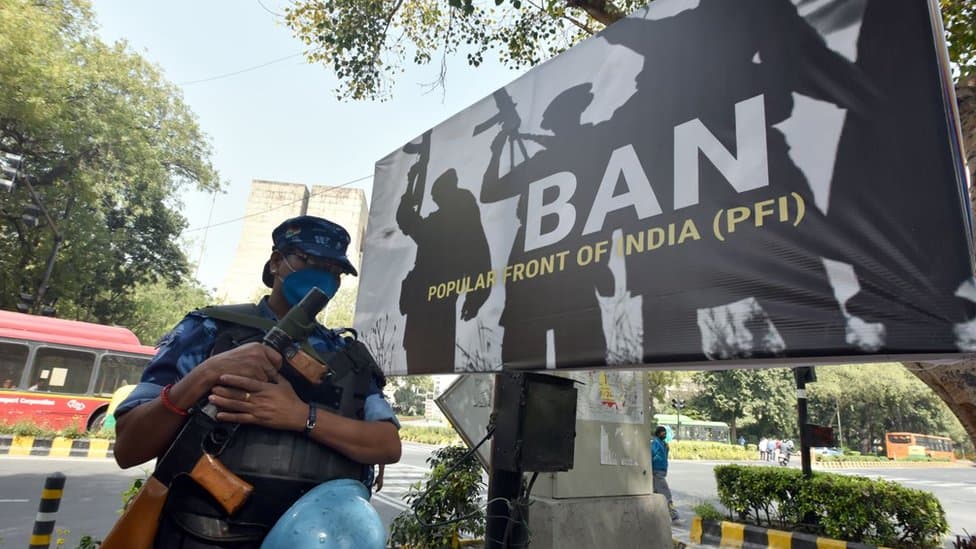
The Indian government's five-year ban on the Popular Front of India (PFI) and its affiliates, enacted in September 2022 under the Unlawful Activities (Prevention) Act (UAPA), remains a significant point of discussion and legal scrutiny. The ban, which declared the organization an "unlawful association," was a culmination of extensive investigations into alleged terror links and anti-national activities. Social media platforms, including Twitter, were directed to withhold the organization's accounts following the government's order.
The Ministry of Home Affairs (MHA) cited the PFI's alleged connections with banned Islamist groups like the Students Islamic Movement of India (SIMI), Jamat-ul-Mujahideen Bangladesh (JMB), and the Islamic State (ISIS). Authorities claimed the PFI and its fronts operated under the guise of socio-economic and political organizations while pursuing a "secret agenda to radicalize a particular section of society." Investigations reportedly established clear linkages between PFI and these proscribed organizations, with some PFI cadres allegedly joining international terrorist groups.
The ban extended to eight associate organizations, including the Rehab India Foundation, Campus Front of India (CFI), All India Imams Council (AIIC), National Confederation of Human Rights Organization (NCHRO), National Women's Front, Junior Front, Empower India Foundation, and Rehab Foundation, Kerala. These groups were accused of "indulging in unlawful activities prejudicial to the integrity, sovereignty, and security of the country." The government's notification stated the ban would remain in effect for five years.
Despite the prohibition, the PFI's political wing, the Social Democratic Party of India (SDPI), has continued its activities, often criticizing the ban as an affront to Indian democracy and constitutional rights. Reports indicate that some PFI-affiliated social media accounts have rebranded, suggesting an ongoing effort to maintain presence and influence. The PFI has consistently denied all allegations, labeling them as a "witch hunt" and baseless claims designed to create an "atmosphere of terror."
The ban's long-term effectiveness remains a subject of debate among analysts, with some suggesting that while the organization itself may be dismantled, its underlying ideology could persist and potentially resurface under new guises. The government, however, maintains that the ban is a crucial step in safeguarding national security and communal harmony.