Investment and Exports Drive GDP Growth, but Long-Term Profitability Remains Key
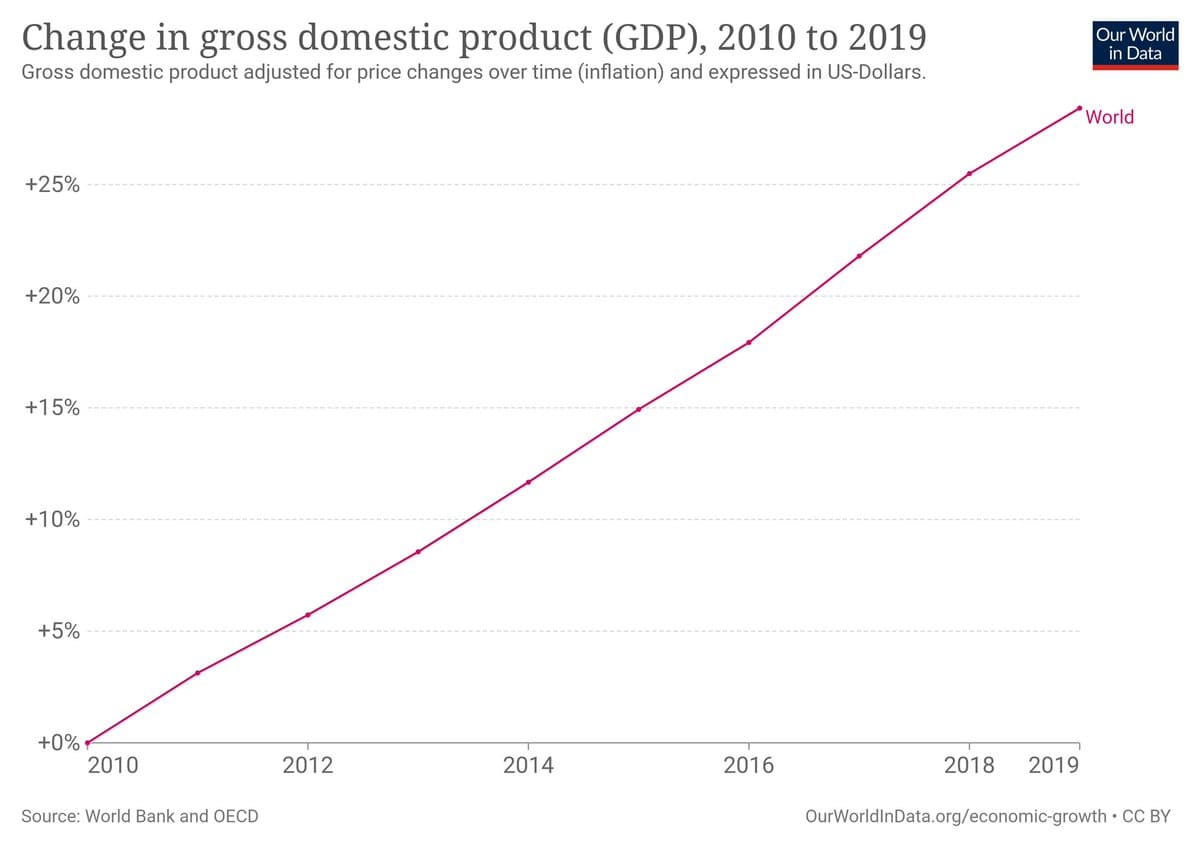
Economic commentator Noah Smith recently highlighted that the construction of capital goods and increased exports directly contribute to a nation's Gross Domestic Product (GDP). While these factors can boost GDP figures, Smith cautioned that such growth does not inherently guarantee domestic profitability, a crucial element for long-term economic health.
"Yep. Capital goods are counted in GDP, so when you build a bunch of factories and robots and stuff, GDP goes up. Exports also increase, which adds to GDP as well. Neither of these things require domestic profitability, but in the long term that matters a lot," stated Noah Smith in a recent social media post. This perspective underscores a nuanced view of economic indicators.
Gross Domestic Product, a primary measure of a country's economic activity, is calculated using the expenditure approach, which includes consumption, government spending, investment (capital goods), and net exports. Therefore, an increase in investment in factories and machinery, or a rise in goods and services sold to other countries, directly inflates GDP. For instance, India's capital goods sector, encompassing heavy engineering and machine tools, saw production rise from Rs 2,29,533 crore in 2014-15 to Rs.4,29,001 crore in 2023-24, partly due to the "Make in India" initiative.
However, the distinction between GDP growth and domestic profitability is significant. A country can experience high GDP growth through foreign investment in capital goods or by exporting goods produced by foreign-owned entities, where a substantial portion of profits may be repatriated rather than reinvested domestically. This scenario, while boosting immediate GDP, may not translate into sustainable national wealth or improved living standards for its citizens.
Economists often debate the limitations of GDP as a sole measure of economic well-being. Critics argue that GDP does not account for income distribution, environmental impact, or the long-term sustainability of growth. The emphasis on domestic profitability, as highlighted by Smith, points to the importance of considering where the economic benefits ultimately accrue and whether they foster a robust, self-sustaining economy.