Japan's FAST Fusion Project Completes Conceptual Design, Targets 50 MW Demonstration by Late 2030s
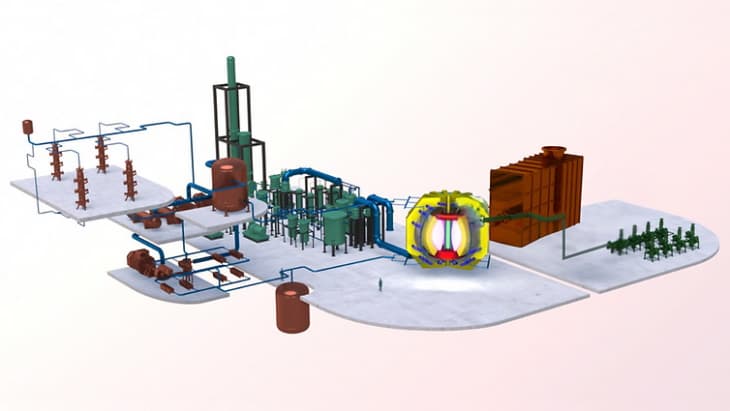
Tokyo, Japan – Japan's privately-led Fusion by Advanced Superconducting Tokamak (FAST) project has successfully completed its conceptual design phase, marking a significant milestone in the global pursuit of practical fusion energy. The project aims to demonstrate fusion energy power generation, targeting approximately 50 megawatts (MW) of fusion output, by the end of the 2030s. This initiative positions Japan as a key player in accelerating the development of a clean energy future.
The FAST project, a collaboration between Starlight Engine Ltd. and Kyoto Fusioneering Ltd., along with numerous academic and industrial partners, was launched in November 2024. Its core design features a low-aspect-ratio tokamak combined with high-temperature superconducting (HTS) magnets. This innovative approach allows for a more compact and economical reactor, promising reduced manufacturing times and costs compared to traditional, larger tokamak designs.
Unlike many fusion experiments focused solely on plasma physics, FAST is engineered as a full fusion power plant prototype. "Unlike most fusion experiments that focus purely on plasma, FAST is engineered as a full fusion power plant prototype, complete with heat extraction, fuel cycle systems, power conversion, and breeding technologies," stated a recent social media post by Dr. Singularity. This integrated approach aims to address the comprehensive technical challenges required for commercial fusion power.
The Conceptual Design Report (CDR), detailing the plant’s design information and technical feasibility, was completed within a year of the project's launch. Kiyoshi Seko, CEO of Starlight Engine and President and COO of Kyoto Fusioneering, remarked, "Completing the conceptual design in just one year is a result of Japan's decades of research achievement." The project will now transition to the engineering design phase, site selection, and regulatory approvals, with construction anticipated after 2028.
While the project targets a fusion output of 50 MW, the initial power generation demonstration by the late 2030s will focus on producing electricity from fusion reactions, not necessarily achieving net positive power production where electricity output exceeds consumption. The FAST project aligns with Japan’s national "Fusion Energy Innovation Strategy," leveraging the nation's extensive experience in fusion research and manufacturing capabilities to propel fusion energy toward commercial viability.