National Lawyers Guild Advises Military on Legality of Orders, Drawing Criticism
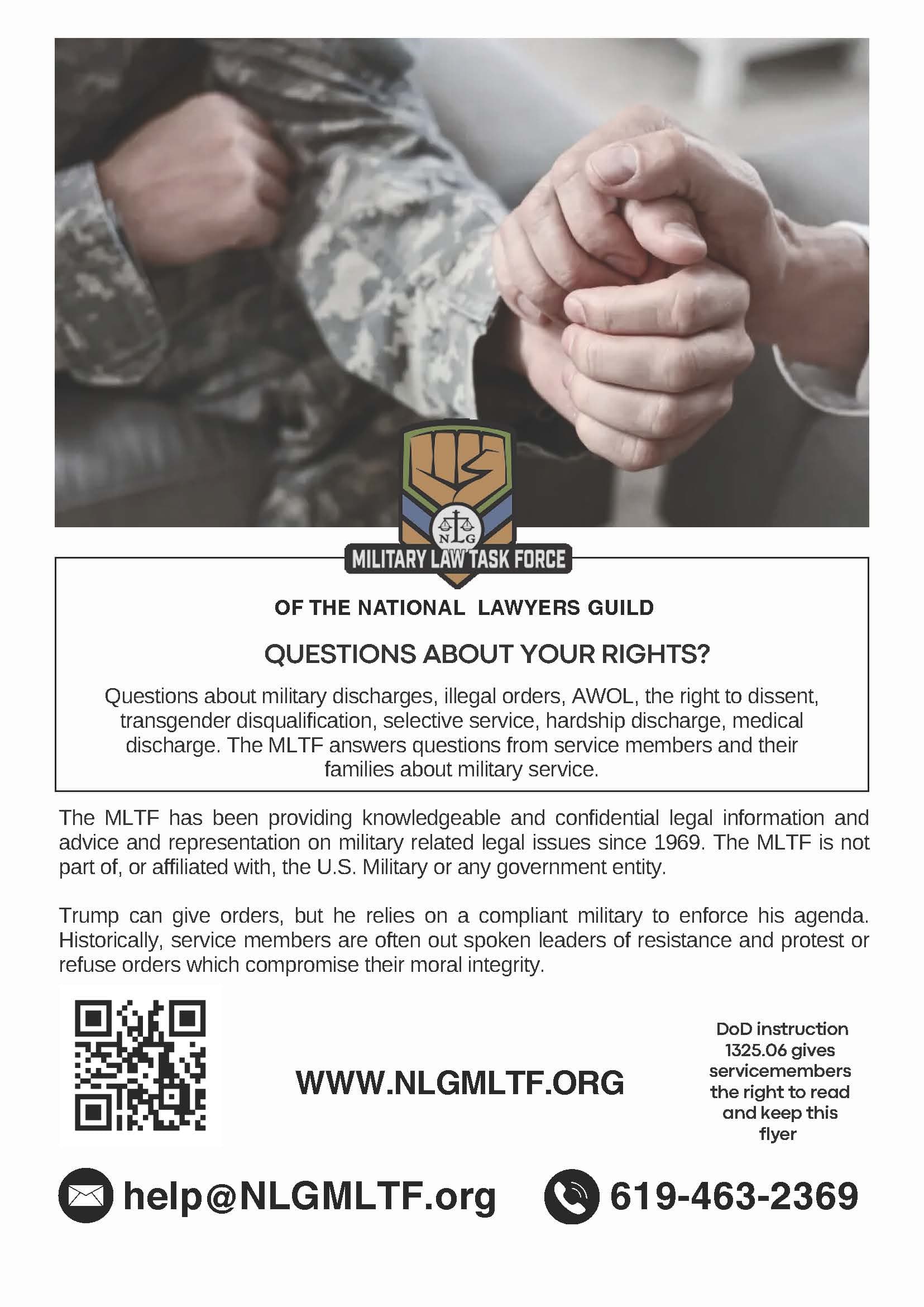
The National Lawyers Guild (NLG) has issued guidance to U.S. military personnel regarding their right and duty to refuse orders deemed unlawful under domestic and international law. This initiative, from the NLG's Military Law Task Force, outlines scenarios that could lead to charges of war crimes or human rights violations, including those subject to universal jurisdiction. The NLG's advice covers potential orders related to the removal of foreign nationals, actions against civilian protesters, assisting law enforcement, or engaging enemy vessels.
The NLG's guidance states, "You might later be court-martialed for war crimes or charged with violations of the law of war or human rights law. Some treaties provide for 'universal jurisdiction' for war crimes, torture, etc., with no statute of limitations, so you could be arrested in any country at any time." This emphasizes the long-term legal risks for service members. The organization, founded in 1937, describes itself as a progressive public interest association dedicated to human rights over property interests.
Journalist Andy Ngo, known for his reporting on left-wing activism, characterized the NLG's actions as encouraging "seditious actions against the President." Ngo stated in a recent tweet that the NLG is a "far-left legal group that advocates for Antifa violence and helps them escape justice," further claiming they are "made up of communists and anarchist extremists." Ngo has previously alleged the NLG provides legal support that enables groups like Antifa.
The NLG maintains that its role is to provide legal assistance to protect First Amendment rights for all protesters and does not endorse violence. The principle that military personnel must disobey "manifestly unlawful" orders is well-established in U.S. military law and international standards, such as those stemming from the Nuremberg trials. Service members are expected to presume orders are lawful, but they also have a duty to refuse orders that are clearly illegal.
Legal experts note that while military orders are generally presumed lawful, service members can face prosecution for obeying orders that are patently unlawful. The determination of an order's legality can be complex, and service members who disobey do so at their own risk, potentially facing court-martial if the order is later deemed lawful. The NLG's advisory aims to inform personnel of these critical legal distinctions and their responsibilities.