New Book "Antimemetics" Explores Why Some Ideas Fail to Spread, Debuts in Interintellect Discussion
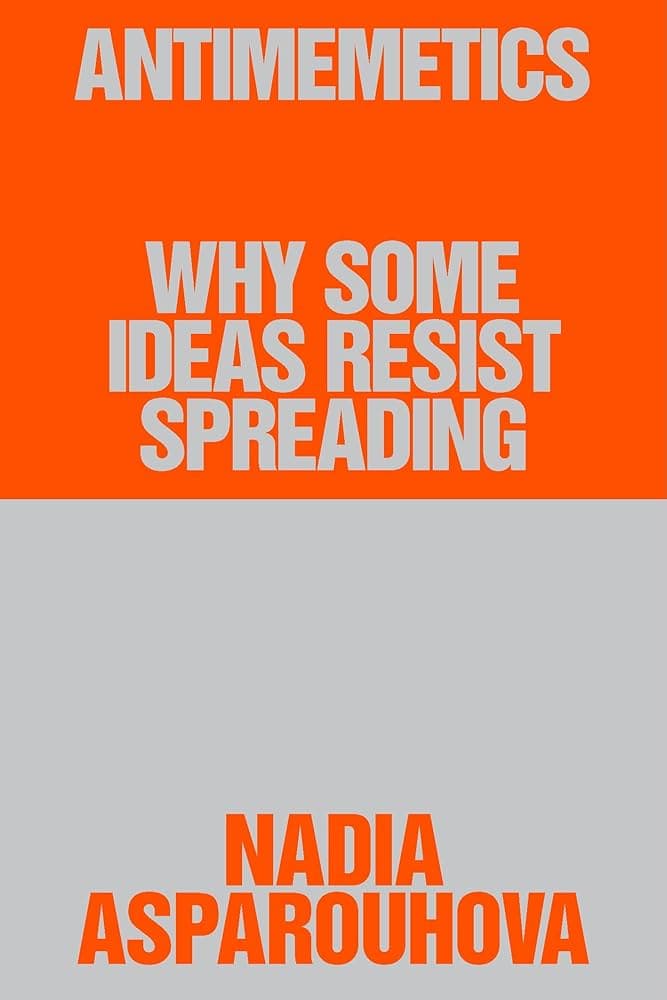
A new book titled "Antimemetics: Why Some Ideas Resist Spreading," authored by researcher and writer Nadia Asparouhova (formerly Eghbal), is sparking discussion about the nature of information dissemination. The book, published by Dark Forest Collective, delves into why certain compelling ideas struggle to gain traction or be remembered, contrasting with the rapid spread of viral memes. Asparouhova recently joined economist and data scientist Alaka Halder and Interintellect founder Anna Gát for a comprehensive conversation on the topic.
The discussion, hosted by Interintellect, centered on the book's premise that in an era of unprecedented information sharing, some of the most significant ideas are becoming increasingly difficult to find. As the tweet from Interintellect stated, "Why do some ideas catch on instantly while others, just as compelling, disappear? Investigate the hidden mechanics of 'Antimemetics' with researcher @nayafia, @HalderAlaka & @TheAnnaGat." This highlights the central paradox Asparouhova explores.
Asparouhova's work builds upon the concept of "antimemes," which she encountered in the sci-fi novel "There Is No Antimemetics Division." Her book posits that while memes are self-replicating cultural bits thriving in an attention economy, antimemes are ideas that actively resist being remembered or shared, despite their potential importance. This phenomenon impacts how we perceive and process information in an increasingly fragmented digital landscape.
The author's previous work includes "Working in Public: The Making and Maintenance of Open Source Software," which explored how open-source developers navigate public online spaces. "Antimemetics" extends this inquiry into the broader societal implications of ideas that fade from collective consciousness. The Interintellect platform, known for fostering "fearless conversations with friendly people," provided a fitting venue for this in-depth exploration, aligning with its mission as a public culture marketplace.