North Korea Mandates Russian Language from 4th Grade Amid Deepening Russia-Pyongyang Alliance
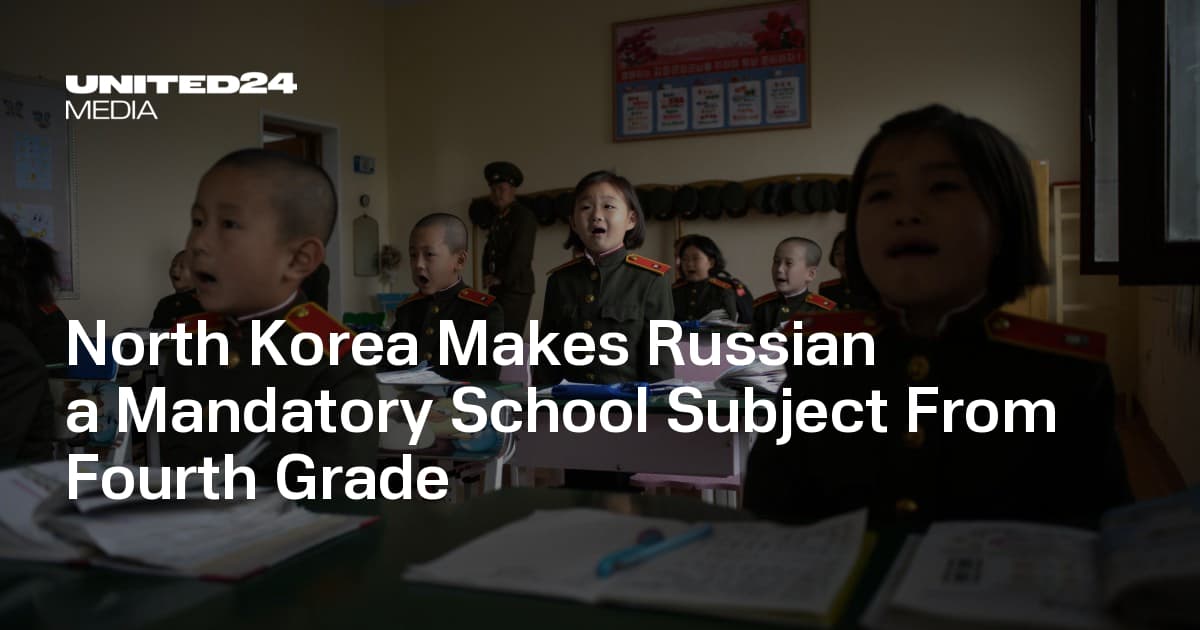
Pyongyang has introduced Russian as a mandatory subject for elementary school children starting from the fourth grade, signaling a deepening educational and strategic alignment with Moscow. This move, confirmed by Russian Natural Resources and Environment Minister Alexander Kozlov, underscores the growing ties between the two nations, which also include military cooperation and a mutual defense pact.
Minister Kozlov, co-chairman of the intergovernmental commission, stated that Russian is now a compulsory language in DPRK schools. He noted that approximately 600 North Koreans currently study Russian, while over 3,000 Russian schoolchildren and 300 university students are learning Korean, indicating a reciprocal educational exchange.
The educational shift coincides with significant military collaboration. North Korea dispatched military personnel to Russia in autumn 2024, with Pyongyang confirming on April 28, 2025, that its troops were fighting alongside Russian forces. Reports indicate that around 12,000 North Korean troops, including special forces, were sent, and South Korean intelligence has warned of plans for an additional 30,000. Clashes between Ukrainian and North Korean troops were reported in Russia's Kursk region in November 2024, with both nations officially acknowledging North Korean involvement in April 2025.
Further solidifying their relationship, Russian President Vladimir Putin and North Korean leader Kim Jong Un signed a "comprehensive strategic partnership" in June 2024. This pact includes a mutual defense clause, obligating both countries to provide immediate military and other assistance if either is attacked. Western officials have expressed concern that this agreement could lead to Russian aid for North Korea's missile or nuclear programs, particularly in developing delivery systems.
The strengthening alliance has drawn international scrutiny, with critics, such as social media commentator Mario Nawfal, describing it as an "Axis of Evil 2.0." Nawfal's tweet highlighted the mandatory Russian language education and alleged North Korean troop deployments, stating, "Kim Jong-un’s starving subjects will now spend their precious classroom hours conjugating 'ya tovarishch' instead of learning how to feed themselves, all because Daddy Putin needs more cannon fodder and missile tech." The tweet also claimed North Korea is "shipping 12,000 troops (and another 30,000 on deck) to die in Donbas for vodka and bullets, while Putin’s handing out nukes and vetoes at the UN." This partnership is seen by some as a direct consequence of Western sanctions, which have pushed the two isolated nations closer together.