P264 Million Kennon Road Rock Shed Under Scrutiny Amidst Landslide, Officials Assert Efficacy
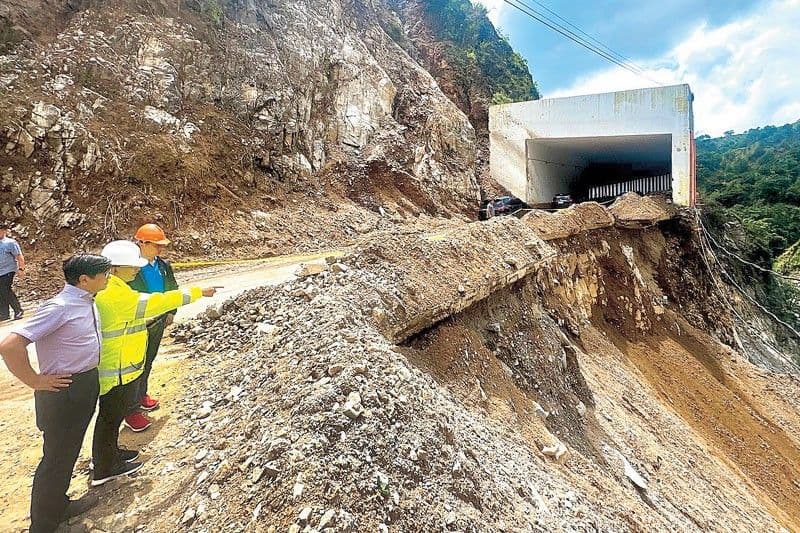
Rock-shed tunnels, critical civil engineering structures designed to safeguard roadways from geological hazards, have once again become a focal point following a recent landslide event. While their existence is predicated on protecting infrastructure and travelers, a specific P264 million rock shed on Kennon Road in the Philippines has drawn both criticism and defense regarding its performance during recent weather disturbances. The importance of these structures was underscored by Brian Roemmele, who stated in a social media post, "> This Is Why Rock-Shed Tunnels Exist. Just in time for this landslide…," implying their timely necessity.
Rock sheds are constructed in mountainous regions prone to rockfalls and landslides, acting as a reinforced concrete covering over roads or railways. These structures are engineered to protect the surface and vehicles from falling debris, often featuring sloping surfaces to deflect material or impact-absorbing layers. Their strategic placement in high-risk corridors, where geological instability, rainfall, and seismic activity make sudden collapses inevitable, highlights their role in maintaining critical transport links.
However, the effectiveness of the P264 million rock shed along Kennon Road in Tuba, Benguet, has been publicly questioned by President Ferdinand Marcos Jr. Following an inspection, President Marcos described the project as "problematic" and "useless," citing that its slope protection immediately disintegrated and failed to prevent soil collapse and rockfalls. He estimated that rectifying the issues would cost at least double the original amount, labeling such irregularities as economic sabotage due to their impact on local livelihoods and road closures.
Despite the President's strong criticism, local officials, including Tuba Mayor Clarita Sal-ongan, Camp 4 barangay chairman John Dogao, and Department of Public Works and Highways-Cordillera Administrative Region (DPWH-CAR) officials, have maintained that the rock shed fulfilled its purpose. They asserted that the structure protected motorists and residents from perennial land and rock slides, particularly during Typhoon Emong in late July, which allowed Kennon Road to remain passable. DPWH-CAR officials also pointed to decades of illegal pocket mining above and below the structure as a significant factor compromising the mountain slopes' stability, rather than the rock shed's design.