Small Businesses Risk Losing 10-30% of Employee Retention Credits to Factoring Firms Amid IRS Fraud Warnings
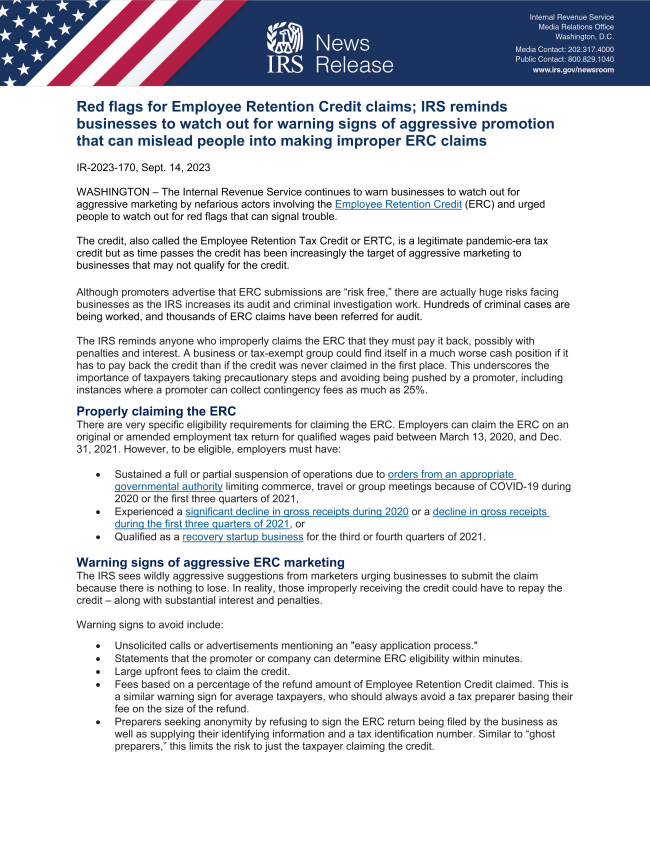
Small businesses seeking quick access to their anticipated tax refunds, particularly the Employee Retention Credit (ERC), are increasingly selling these claims to third-party factoring companies, often at a significant discount. This practice, which can result in businesses receiving "a fraction of their value," has drawn sharp criticism and warnings from the Internal Revenue Service (IRS) regarding potential wealth transfer to "elites" and the risks of improper claims.
The concern was highlighted by ChetGPT, who stated, "Small businesses will sell their refunds for a fraction of their value to elites who have the resources to fight. It is all more ways to transfer money to the people with money." This sentiment reflects a growing apprehension about the financial mechanisms that allow intermediaries to profit from businesses' immediate need for liquidity.
The Employee Retention Credit (ERC) was established during the COVID-19 pandemic to encourage businesses to retain employees through refundable tax credits. However, due to IRS processing backlogs, many businesses face lengthy waits for their refunds. This delay has created a market for "ERC mills" and factoring firms that offer advances on these credits, typically charging fees ranging from 10% to 30% of the total refund amount.
The IRS has repeatedly issued stern warnings about these aggressive marketing tactics, listing ERC-related fraud as part of its "Dirty Dozen" tax scams. These promoters often make misleading claims about eligibility, charge large upfront fees or contingency fees based on the refund amount, and may not adequately inform businesses of the complex eligibility requirements or the need to adjust wage deductions on their income tax returns.
Businesses that improperly claim the ERC, often influenced by these third-party firms, face severe consequences. These can include having to repay the entire credit, along with substantial penalties and interest. The IRS is actively auditing and conducting criminal investigations into fraudulent ERC claims, emphasizing that taxpayers are ultimately responsible for the accuracy of their submissions.
To mitigate risks, the IRS urges businesses to exercise extreme caution and consult trusted, independent tax professionals before engaging with any firm promising quick ERC refunds. The agency advises against working with any preparer whose fee is based on a percentage of the refund, as this is a significant red flag for potentially improper claims and financial exploitation.