UK Exits Talks on Joining EU's €150 Billion Defense Loan Program
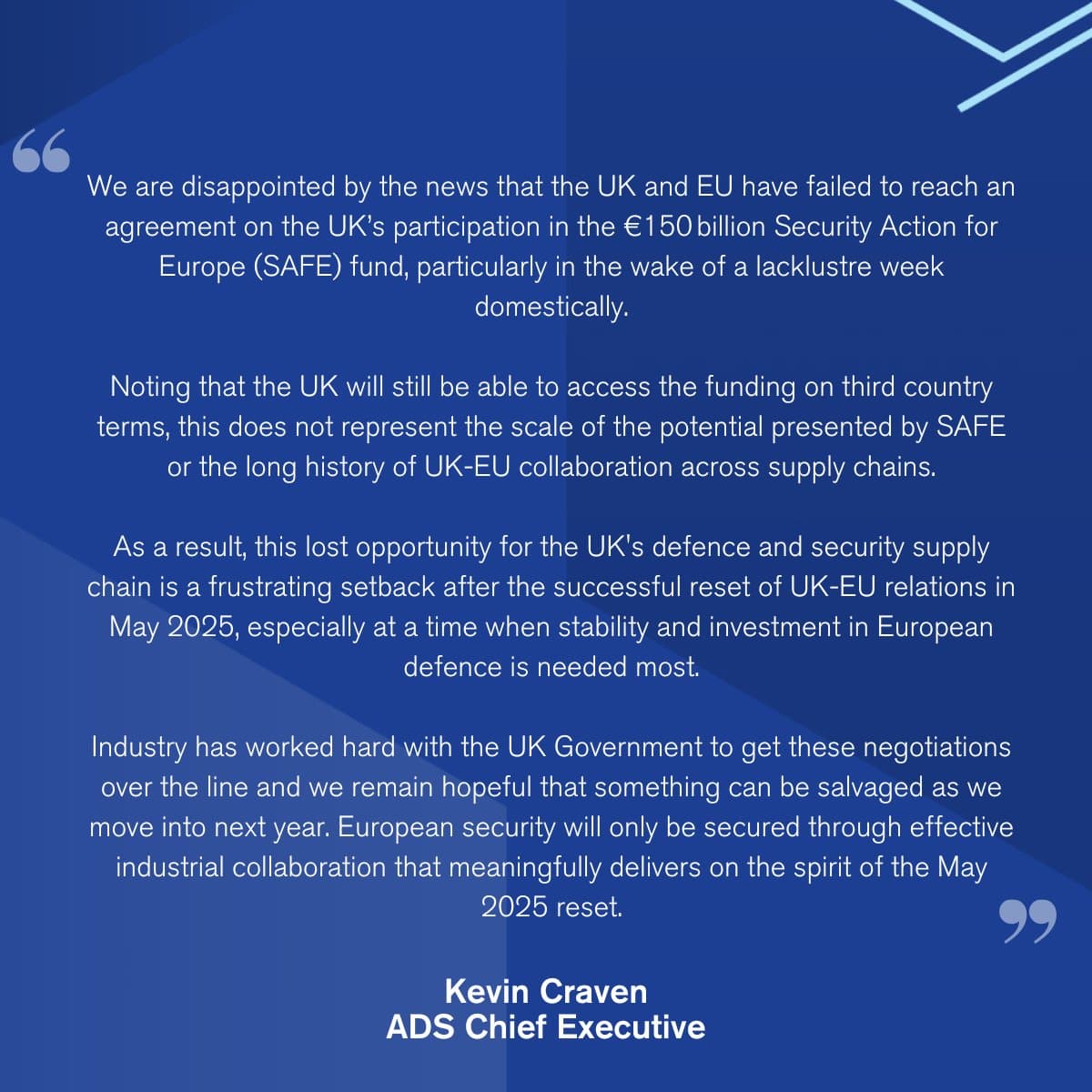
London, UK – Negotiations for the United Kingdom to join the European Union's Security Action for Europe (SAFE) loan program, valued at €150 billion, have concluded without an agreement, the British government announced Friday. This development comes amidst growing concerns within the European defense sector regarding the slow pace of funding mechanisms and their impact on innovative startups.
The decision marks a setback for post-Brexit cooperation on defense, as the SAFE program was designed to bolster European defense capabilities and support Ukraine. UK EU Relations Minister Nick Thomas-Symonds stated, > "negotiations were carried out in good faith, but our position was always clear: we will only sign agreements that are in the national interest and provide value for money." He added that while disappointing, the UK defense industry could still participate in SAFE projects on third-country terms.
The broader European defense technology ecosystem faces significant hurdles, as highlighted by James Clark, who tweeted, > "Classic EU outcome of arguing over the construction of a fund while Defence startups need the money NOW." Clark further lamented that by the time funds are committed, "many startups will have withered and died," criticizing the slow and bureaucratic process.
Despite a more than 500% increase in investment into European defense tech startups between 2021 and 2024, compared to the preceding three years, a maturity gap persists when compared to the United States. Experts note that European defense tech companies often require a decade or longer to reach maturity, clashing with traditional venture capital timelines. This necessitates "patient capital" and dual-use models to generate earlier revenue.
The European Commission has acknowledged these challenges, outlining a "Defence Industry Transformation Roadmap" to accelerate innovation. Initiatives like the European Defence Fund (EDF) and the European Defence Innovation Scheme (EUDIS) aim to support new entrants. However, startups frequently encounter lengthy procurement cycles, regulatory complexities, and a "Series B+ funding gap" for later-stage investments.
Proposed EU actions include a pilot instrument for agile rapid defense innovation and facilitating access to EU infrastructures to accelerate validation. The aim is to streamline the process, enabling innovative companies to enter the defense sector more easily and deploy game-changing solutions for armed forces, addressing the urgent need for speed and responsiveness in a rapidly evolving geopolitical landscape.