US Deepens Taiwan Ties with New Act, Drawing Beijing's Ire
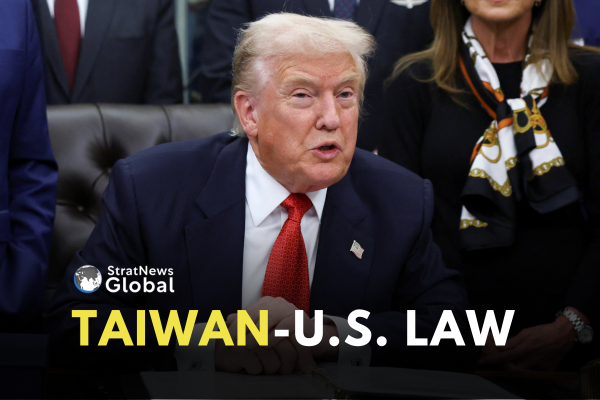
Washington D.C. – President Donald Trump has signed the Taiwan Assurance Implementation Act into law, mandating that the U.S. State Department review and update its guidelines on official interactions with Taiwan at least once every five years. This legislative action is seen as a significant step in strengthening U.S.-Taiwan relations, moving beyond the long-standing policy of "strategic ambiguity." The move has been met with appreciation from Taipei but strong condemnation from Beijing.
The new law builds on previous efforts, including the lifting of restrictions on U.S.-Taiwan official contacts in 2021 during Trump's first administration. Taiwan's Presidential Office spokesperson Karen Kuo stated that the act "affirms the value of U.S. interaction with Taiwan, supports closer Taiwan-U.S. relations, and stands as a firm symbol of our shared values of democracy, freedom, and respect for human rights." Taiwan's Foreign Minister Lin Chia-lung indicated that more frequent reviews could facilitate greater access for Taiwanese officials within U.S. federal agencies.
Beijing, however, views the legislation as a direct challenge to its sovereignty claims over Taiwan, which it considers a breakaway province. Chinese Foreign Ministry spokesperson Lin Jian asserted that "The Taiwan question is the core of China's core interests and the first red line that must not be crossed in China–U.S. relations." He urged the U.S. to cease all official interactions with Taiwan to avoid sending "wrong signals to 'Taiwan independence' separatist forces."
Taiwan plays a critical role in the global economy, particularly as a dominant force in advanced semiconductor manufacturing, producing over 90% of the world's most advanced chips. This economic significance underscores the island's strategic importance. The recent U.S. legislative action comes amidst heightened tensions in the Indo-Pacific, with countries like Japan increasingly voicing concerns about regional stability. Japanese Prime Minister Sanae Takaichi has previously indicated that a Chinese attempt to seize Taiwan by force could pose an existential risk to Japan.
The signing of this act precedes an anticipated April trip by President Trump to Beijing, where discussions are expected to be complex, potentially involving trade tariffs and issues such as fentanyl. Analysts suggest that Beijing's response could include an increase in "gray-zone incursions" and naval exercises in the Taiwan Strait, aiming to assert its claims and remind regional actors of its military presence. This development marks an evolution in U.S.-Taiwan relations, signaling a more overt commitment from Washington and potentially reshaping the dynamics of power in the region.