User Leverages ChatGPT to Detect USPTO Scam Amid Rising Fraud Concerns
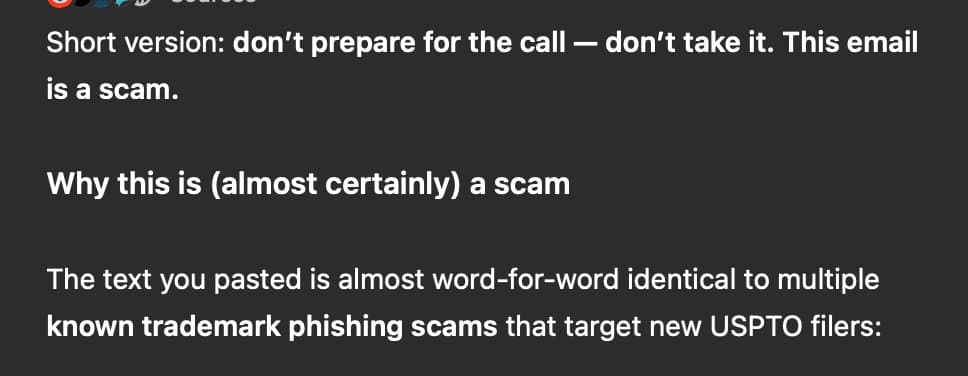
Marcelo Calbucci recently reported using ChatGPT to identify and avoid a scam message purporting to be from the United States Patent and Trademark Office (USPTO). Calbucci, who was preparing to respond to the message, pasted its content into the AI tool to ensure his reply was appropriate, inadvertently uncovering the fraudulent nature of the communication. This incident highlights the growing role of artificial intelligence in personal cybersecurity, particularly against increasingly sophisticated online threats.The USPTO has frequently warned the public about a proliferation of trademark-related scams, which often mimic official communications to trick individuals and businesses. These fraudulent solicitations commonly involve imposters claiming to be from the USPTO, alleging issues with applications or registrations, and pressuring recipients for immediate payment or personal information. Official USPTO communications will always come from a .gov email address and never request sensitive details over the phone or unsecured channels.ChatGPT, an advanced AI language model, proved instrumental in Calbucci's case by analyzing the message for suspicious patterns. Research indicates that AI tools, including large language models, can act as a "5-second diagnostic" for online scams, effectively identifying subtle clues like unusual language, urgent calls to action, or inconsistencies that human users might overlook. This capability allows AI to flag potential fraud by comparing text against vast datasets of legitimate and malicious content.However, the rise of AI also presents a dual challenge, as scammers themselves increasingly leverage these technologies to craft more convincing and grammatically flawless phishing emails and fraudulent messages. This makes traditional detection methods, such as looking for spelling errors, less effective. Cybersecurity experts emphasize the critical need for continuous vigilance and multi-layered security approaches to combat these evolving threats.To protect against such scams, the USPTO advises checking the Trademark Status & Document Retrieval (TSDR) system for official communications, as any legitimate requests for action or payment will be documented there. Users are also encouraged to be wary of any unsolicited contact demanding immediate action or personal financial details. Calbucci's experience underscores that integrating AI tools into personal security practices can provide an additional layer of defense against sophisticated digital fraud.