Uttar Pradesh and Bihar's Enduring Demographic Influence Poised to Reshape India's Political Landscape
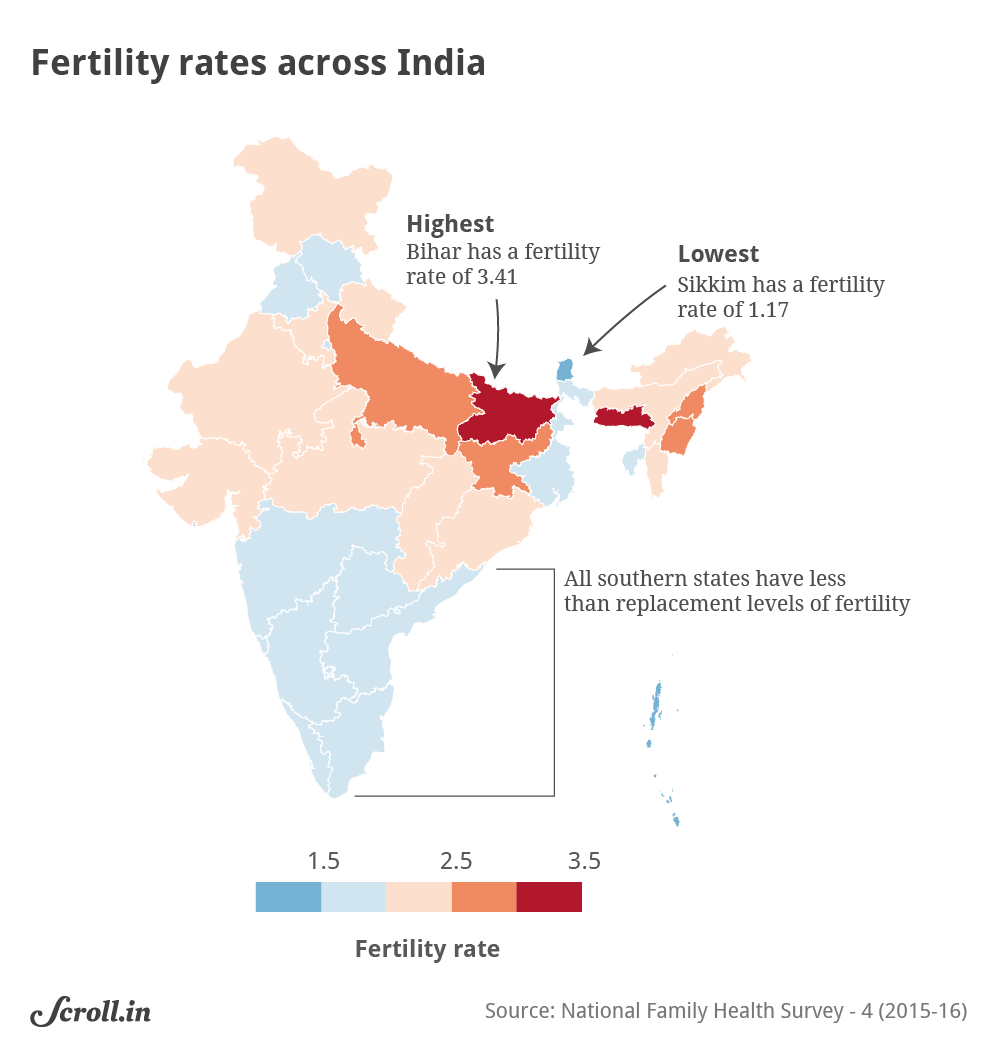
NEW DELHI – Uttar Pradesh (UP) and Bihar are projected to command an increasingly significant share of India's population, a demographic trend that could substantially amplify their electoral power. This phenomenon is largely attributed to a slower pace of modernization and demographic transition within these populous northern states, as noted by analyst Adam Van Buskirk.
"In the future, UP and Bihar will make up an even larger percent of India's population, due to their slower modernization. Their electoral power will be greatly increased by delaying the demographic transition. Again, likely due to sheer passive failure to develop," Van Buskirk stated on social media.
Recent analyses indicate a stark demographic divergence across India. While southern states have largely completed their demographic transition with falling fertility rates, Uttar Pradesh and Bihar, along with other northern states, continue to exhibit higher Total Fertility Rates (TFRs). For instance, as of October 2025, seven northern states, including UP and Bihar, maintain TFRs between 2.5-3.0, surpassing the national average of 1.9.
This sustained population growth in the Hindi heartland states directly impacts political representation, as parliamentary constituencies are periodically redrawn based on population figures. The next delimitation exercise, expected after 2026, could significantly increase the number of Lok Sabha seats allocated to states like Uttar Pradesh and Bihar, potentially shifting the balance of power in the central legislature. This prospect raises concerns among southern states, which have successfully curbed population growth through effective family planning and development initiatives.
The slower demographic transition in these states is often linked to lower indices of human development, including education, healthcare access, and economic opportunities. Data from 2012 indicated that Uttar Pradesh and Bihar consistently ranked at the bottom among major states in terms of Human Development Index (HDI), lagging in life expectancy, literacy, and per capita income. This "passive failure to develop," as described by Van Buskirk, perpetuates higher fertility rates and a larger youth bulge.
While this demographic dividend could offer a substantial workforce, experts emphasize that without adequate investment in education, skill development, and job creation, it risks becoming a burden. The contrasting demographic trajectories highlight the ongoing challenge for India to achieve equitable development and manage the political implications of its diverse population dynamics.