Vivek Ramaswamy Declares 'Woke, Inc.' Message Now 'Almost Anodyne' Amid Shifting Corporate Discourse
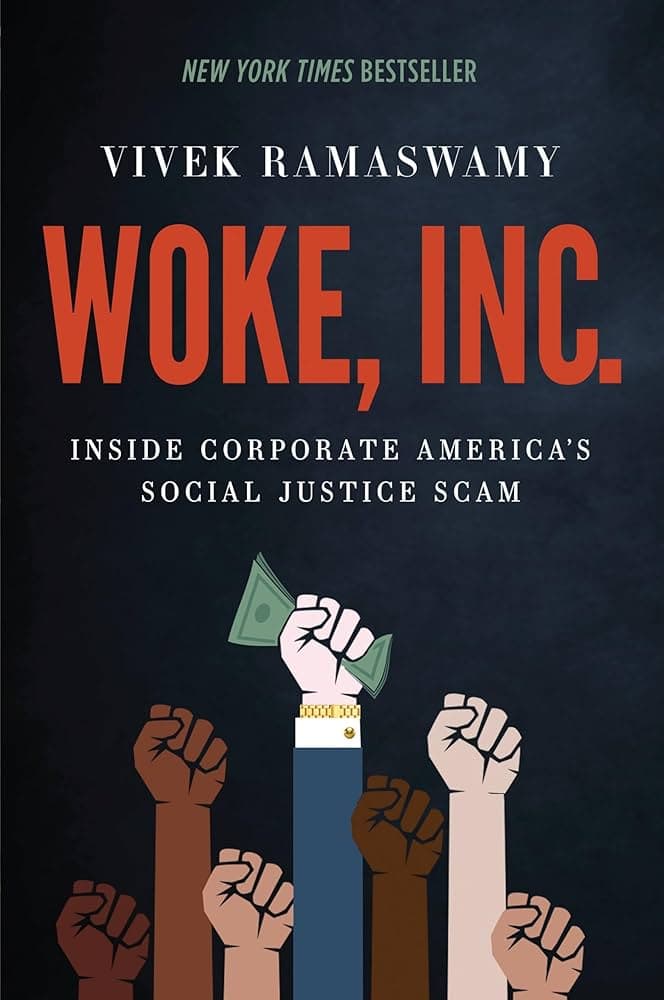
Vivek Ramaswamy, entrepreneur and author, recently stated that the core message of his 2020 book, "Woke, Inc.: Inside Corporate America's Social Justice Scam," has transitioned from being considered "heretical" to "almost anodyne." In a recent social media post, Ramaswamy reflected on the book's initial reception and its current relevance, suggesting a significant shift in public perception regarding corporate social activism. He added, > "History is about to repeat itself, but in a very different context today..."
Published in 2020, "Woke, Inc." criticized the trend of "stakeholder capitalism," arguing that corporations use progressive social justice stances as a "smokescreen" to mask less ethical business practices and expand their influence beyond their economic mandate. Ramaswamy contended that this "wokeness" in business diverts from shareholder profit maximization and ultimately harms American democracy. The book positioned him as a prominent voice against what he termed the "woke-industrial complex."
Since the book's release, Ramaswamy has emerged as a leading figure in the "anti-woke" movement, frequently appearing in conservative media and expanding his critique to include Environmental, Social, and Governance (ESG) investing. He views ESG as an insidious secular creed that allows the private sector to pursue political agendas that bypass democratic processes. This perspective underpins his subsequent ventures and public advocacy.
In 2022, Ramaswamy co-founded Strive Asset Management, an investment firm explicitly designed to counter the ESG movement by urging companies to focus solely on profit and shareholder value, rather than social or political objectives. Strive's rapid growth, surpassing $500 million in assets within its first three months, underscores a growing market for anti-ESG investment options. This development highlights a significant pushback against corporate social responsibility initiatives.
The shift in the discourse, as observed by Ramaswamy, reflects a broader trend where criticisms of "woke capitalism" and ESG have gained traction, particularly within conservative political and business circles. States like Louisiana and Florida have taken steps to divest funds from firms promoting ESG, indicating a notable change in the corporate and political landscape since "Woke, Inc." was first published. This evolving context suggests that ideas once deemed radical are now becoming more widely discussed and accepted.