Drumming's "Antigravity" Technique Confirmed as Real, Unlocking Extreme Speeds
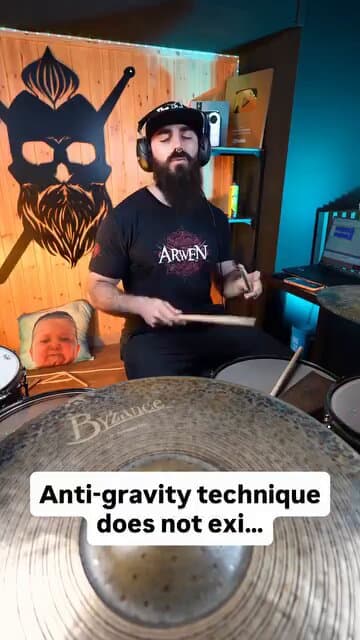
Brian Roemmele recently ignited discussion among drummers by tweeting, "The 'antigravity' drum technique is real…," validating a method often referred to as the "gravity blast" or "freehand technique." This advanced percussive skill enables drummers to achieve exceptionally fast, one-handed snare drum rolls by leveraging the drumstick's rebound and the drum's rim as a fulcrum. The technique, while seemingly defying physical limitations, relies on precise mechanics rather than actual antigravity.
The core of the gravity blast involves using the rim of the snare drum as a pivot point. With a specific grip and arm motion, a drummer can execute both a downstroke and an upstroke with a single hand movement, effectively producing two distinct hits. This innovative approach allows for a doubling of notes compared to traditional single-stroke techniques, significantly increasing drumming speed and efficiency.
Often associated with extreme metal genres for its role in creating rapid blast beats, the technique's principles extend to various drumming styles seeking enhanced speed and endurance. Drummers utilizing this method report reduced physical exertion and fatigue, as it capitalizes on the stick's natural kinetic energy rather than solely muscular force. This makes complex rhythmic patterns more accessible and sustainable over extended periods.
Experts clarify that the "antigravity" moniker is a descriptive term for the technique's seemingly effortless speed and rebound, not a literal defiance of physics. Instead, it highlights a sophisticated understanding and application of leverage and momentum in drumming. Roemmele's affirmation underscores the growing recognition of this technique as a legitimate and impactful development in percussive artistry, offering new avenues for technical proficiency and musical expression.