Compliance Expert Flags Railgun Funds Over Illicit Mixing Concerns
A prominent voice in cryptocurrency compliance, Nathaniel Fried, has publicly stated his firm's policy of declining funds associated with the Railgun privacy protocol due to the inability to verify their legitimate origin. Fried's statement highlights growing concerns within the industry regarding privacy-enhancing technologies that can be exploited for illicit activities, emphasizing the challenge of distinguishing clean funds from those potentially mixed with stolen assets. This stance underscores a critical tension between user privacy and regulatory demands for anti-money laundering (AML) protocols in the decentralized finance (DeFi) space.
Railgun, a decentralized finance privacy protocol, utilizes zero-knowledge proofs to enable private transactions, effectively obscuring the source and destination of funds. However, this privacy feature has drawn significant scrutiny, with blockchain analytics firms like TRM Labs reporting its increasing use by threat actors, including the North Korean Lazarus Group. Funds stolen in major hacks, such as the $60 million from Harmony's Horizon Bridge and $100 million from the Atomic Wallet exploit, have reportedly been laundered through Railgun, leading to U.S. Treasury sanctions against entities involved.
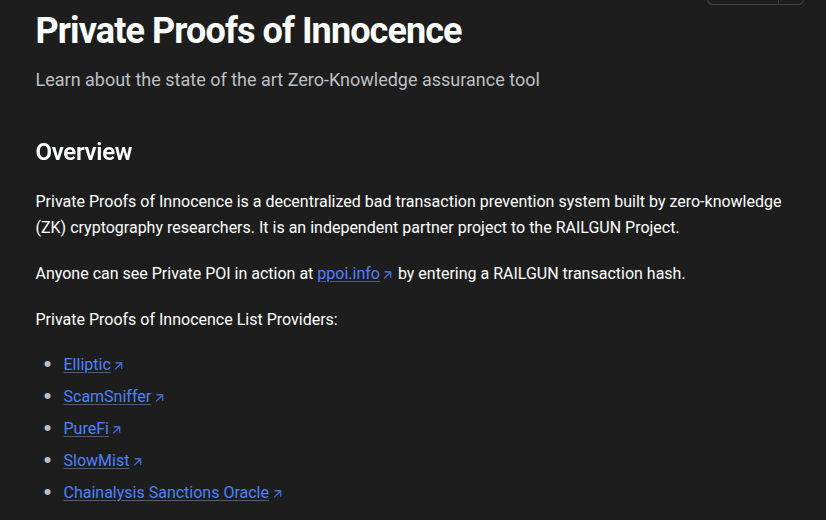
Fried contrasted the situation with the "Tornado Cash PoA" (Proof of Assets) solution, which was developed to allow users to demonstrate the legitimate origin of funds that passed through the sanctioned mixer. "We decline funds where you cannot verify that they are not illicit," Fried stated in his tweet. "If Railgun funds are all potentially mixed with stolen funds we cannot accept them 🤷 That’s why we built the Tornado cash PoA so TC users could prove their funds aren’t illicit." These "Proof of Innocence" mechanisms aim to provide cryptographic evidence of clean funds, offering a pathway for compliance.
The decision by Fried's firm reflects a broader industry struggle to reconcile privacy-preserving technologies with stringent regulatory requirements for financial transparency. Crypto exchanges and financial institutions are under increasing pressure to implement robust AML and Know Your Customer (KYC) procedures, making the acceptance of funds from protocols with unverified origins a significant compliance risk. This development signals a growing trend where the lack of verifiable fund provenance can lead to exclusion from compliant financial ecosystems.
As an expert in crypto compliance and regulatory affairs, Nathaniel Fried's public declaration carries weight, potentially influencing other firms' policies regarding privacy protocols. His pragmatic approach highlights the ongoing need for innovative solutions that can satisfy both user demand for privacy and regulatory mandates for financial integrity. The industry continues to seek a balance, but the current stance on Railgun funds indicates a clear priority for verifiable legitimacy.