Critics Claim Official Inflation Understated by Over 100%, Citing Flawed Housing Metrics
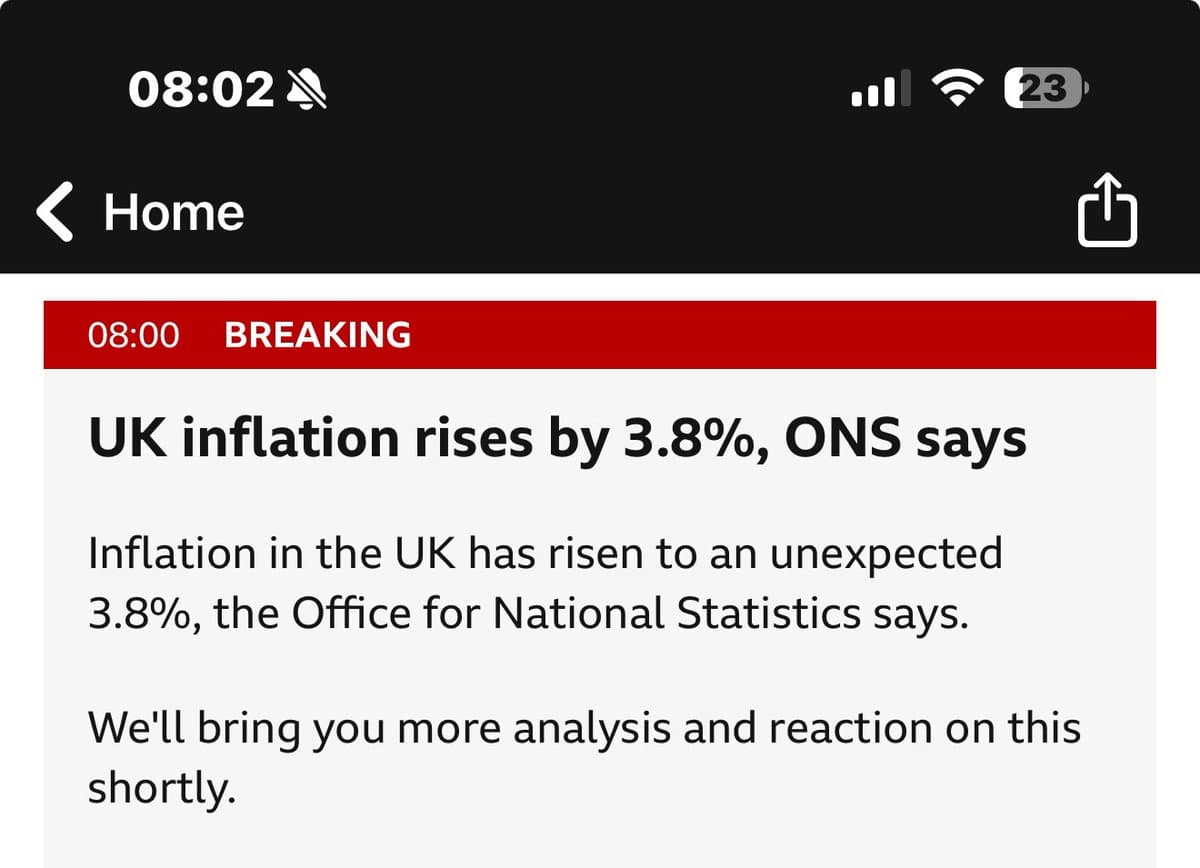
Prominent Bitcoin advocate Peter McCormack has publicly challenged the accuracy of official inflation statistics, asserting that reported figures consistently understate the true cost of living. In a recent social media post, McCormack stated, > "And the inflation numbers are always higher than they admit. It’s a constant con job. CPI is just whatever suits them, it misses really important things like housing." This sentiment reflects a broader debate among economists and the public regarding the Consumer Price Index (CPI) and its methodology.
A significant portion of the CPI, representing 31 to 40 percent of the overall index in some regions, is dedicated to housing costs. This component includes "rent of primary residence" for renters and "owners' equivalent rent" (OER) for homeowners, which estimates what an owner-occupier would pay to rent their home. The Bureau of Labor Statistics (BLS) collects rent data typically every six months, leading to concerns that the index lags real-time market changes.
Critics argue that the current methodology for measuring housing costs, particularly the reliance on OER rather than actual home purchase prices or real-time rental market data, can lead to a substantial underestimation of inflation. For instance, some alternative calculations, such as those by economist John Williams, suggested the U.S. inflation rate in spring 2022 was over 16%, more than double the official CPI figures at the time. This disparity highlights the perceived gap between official statistics and the everyday financial realities of consumers.
The debate extends to the CPI's fundamental purpose, with some economists arguing that its evolution from a "cost of goods index" to a "cost of living index" has introduced biases that tend to report lower inflation rates. Federal Reserve Chair Jerome Powell has acknowledged the public's frustration, noting a disconnect between slowing inflation rates and persistently high living costs. Proposals for modernization, such as monthly data collection for housing and broader coverage, are being considered in some countries to enhance accuracy.
Peter McCormack, known for his "What Bitcoin Did" podcast, frequently frames inflation as "theft" and advocates for Bitcoin as a hedge against currency devaluation. His commentary often contrasts Bitcoin's performance with traditional assets like gold, adjusted for inflation, to emphasize its role as a superior store of value in an economic environment he views as manipulated by official statistics. This perspective underscores a growing distrust in conventional financial metrics and institutions.