Balaji Srinivasan Ponders Inherent Dilemma of Nation-State Survival
Technologist and author Balaji Srinivasan recently articulated a profound philosophical dilemma concerning the long-term viability of nation-states, highlighting the inherent challenges faced by both smaller entities and expansive empires. In a recent social media post, Srinivasan posited a stark choice: "Stay small and get conquered. Get big and get diluted." This statement encapsulates his broader views on national identity and the future of governance.
Srinivasan, known for his "Network State" concept, distinguishes between a "nation" as a group with common culture, history, or language, and a "state" as the governing body. He argues that while a nation can exist without a state, the modern "nation-state" often conflates these two distinct entities. This conceptual clarity is crucial to understanding the forces that shape political longevity.
The dilemma, as outlined by Srinivasan, suggests that a country that "stays small to remain true to its roots" inevitably risks absorption by larger powers. Conversely, an entity that "plays for empire, and truly achieves world domination," faces the challenge of its diverse subjects eventually outnumbering the imperial core. This expansion, he contends, leads to the empire losing touch with its original identity and roots.
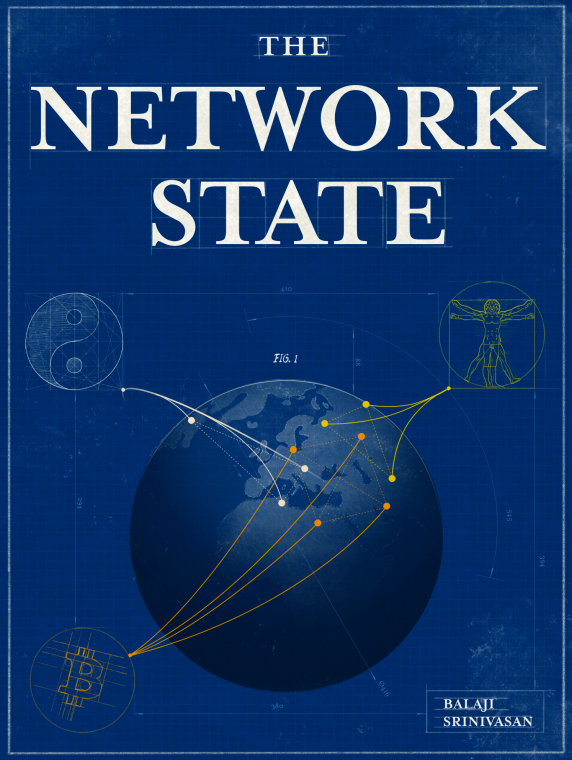
His philosophical musings often lead to the concept of the "Network State," an alternative model for human organization that seeks to address the perceived vulnerabilities of traditional nation-states. This vision involves internet-enabled communities that gradually acquire physical territories and diplomatic recognition, aiming to bypass the traditional geopolitical pressures of conquest or dilution. Srinivasan suggests that the very definition of a nation-state is becoming a variable in an increasingly volatile world.
Srinivasan's analysis encourages a re-evaluation of fundamental assumptions about national sovereignty and identity in an era of rapid technological and social change. His work provides a framework for understanding the evolving dynamics of political power and the search for new forms of collective organization beyond the traditional state model.