Franzen Emphasizes "Trivial Problems" and Conflicting Desires as Core of Narrative Drama
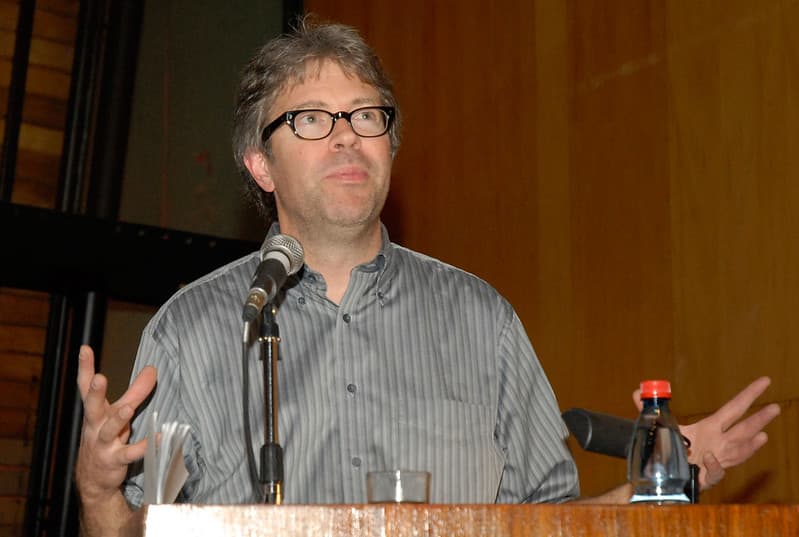
Renowned American novelist Jonathan Franzen has articulated a key aspect of his storytelling philosophy, revealing that the foundation of his narratives often rests on identifying a singular, often "trivial," problem for his main characters. This insight emerged during a discussion with writer and entrepreneur David Perell, where Franzen elaborated on his approach to crafting compelling fiction.
"All my novels have a sentence that describes the problem for the main character," Franzen stated, as quoted by Perell. He further explained that the scale of this problem is less crucial than its existence, noting, "It doesn't have to be a big problem. The smaller the problem, the funnier it is." This perspective highlights Franzen's belief that even minor personal dilemmas can generate significant dramatic and comedic potential, resonating deeply with readers.
Franzen elaborated on how these core problems drive the narrative forward. "Once you have something a character wants, you present some obstacles which checks the important dramatic box of characters who want different things," he explained. He offered a concise example to illustrate this dynamic: "One character wants to get on a plane. The other character has no intention of getting on a plane. That's drama." This interplay of opposing desires, even in mundane scenarios, forms the bedrock of conflict in his work.
Beyond the mechanics of plot, Franzen underscored the importance of humor and psychological distance in his writing. He views himself as fundamentally a "comic novelist," asserting that the ability to laugh at a character is crucial for an author to achieve the necessary perspective and avoid "victimology." This approach, he suggested, allows for a more nuanced portrayal of characters, recognizing that "no one is all good, no one is all bad."
Franzen's method prioritizes character essence over extensive background details, focusing on the immediate dramatic function and desires. This allows for a more organic development of the story, driven by the characters' internal and external conflicts. His insights offer a window into the craft of a writer celebrated for his intricate family sagas and incisive social commentary.