The Fourth Way: A Path to Self-Awareness Distinct from Three Traditional Spiritual Journeys
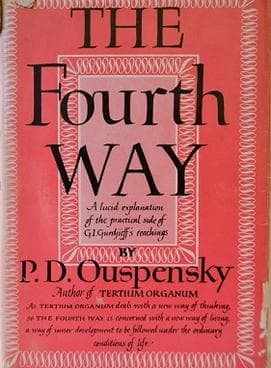
A profound esoteric teaching, known as "The Fourth Way," offers individuals a unique approach to inner development and conscious evolution, distinguishing itself from the traditional paths of the Fakir, Monk, and Yogi. This system, primarily disseminated through the teachings of G.I. Gurdjieff and systematized by his student P.D. Ouspensky, posits that humanity largely lives in a state of "sleep" and mechanicalness. It emphasizes that true awakening and the development of higher faculties are possible only through conscious effort and self-study within the context of ordinary life, rather than through external renunciation or specific religious practices.
Central to the Fourth Way is the concept that humans are "machines," driven by external influences and lacking a unified "I" or permanent will. "We are divided into hundreds and hundreds of different 'I's," Ouspensky explained in his lectures, highlighting the fragmented nature of the ordinary human psyche. The system introduces practices like self-observation and "self-remembering" as fundamental tools to gain awareness of one's mechanicalness and the constant flux of these disparate "I"s.
The Fourth Way differs significantly from other spiritual disciplines by advocating for inner work without requiring withdrawal from the world. Unlike the Fakir's focus on physical suffering, the Monk's path of faith, or the Yogi's pursuit of knowledge, the Fourth Way integrates all aspects of life. It proposes a "three-line work" involving work on oneself, work with others, and work for the "school" or the teaching itself, creating necessary friction for growth.
Key to understanding human existence within this framework are principles like the Law of Three and the Law of Seven, which describe the universal forces and processes governing all phenomena. The system also categorizes individuals into seven levels, from "Man No. 1" (driven by instinctive-moving functions) to "Man No. 7" (possessing full objective consciousness). The goal of the Fourth Way is to move beyond the lower categories, which are characterized by sleep and mechanicalness, towards higher states of being.
The path involves confronting "false personality"—an acquired, illusory self—and struggling against identification, negative emotions, and "buffers" that prevent self-awareness. Ultimately, through sustained effort and understanding, individuals can cultivate a "magnetic center" and develop a permanent "I," leading to genuine will and freedom from accidental influences. This transformative journey, as taught by "The Fourth Way" proponents, is presented not as a belief system, but as a practical science of self-development.