Analyst Warns Against Leaders Citing Divine Mandate Following Controversial Social Media Post
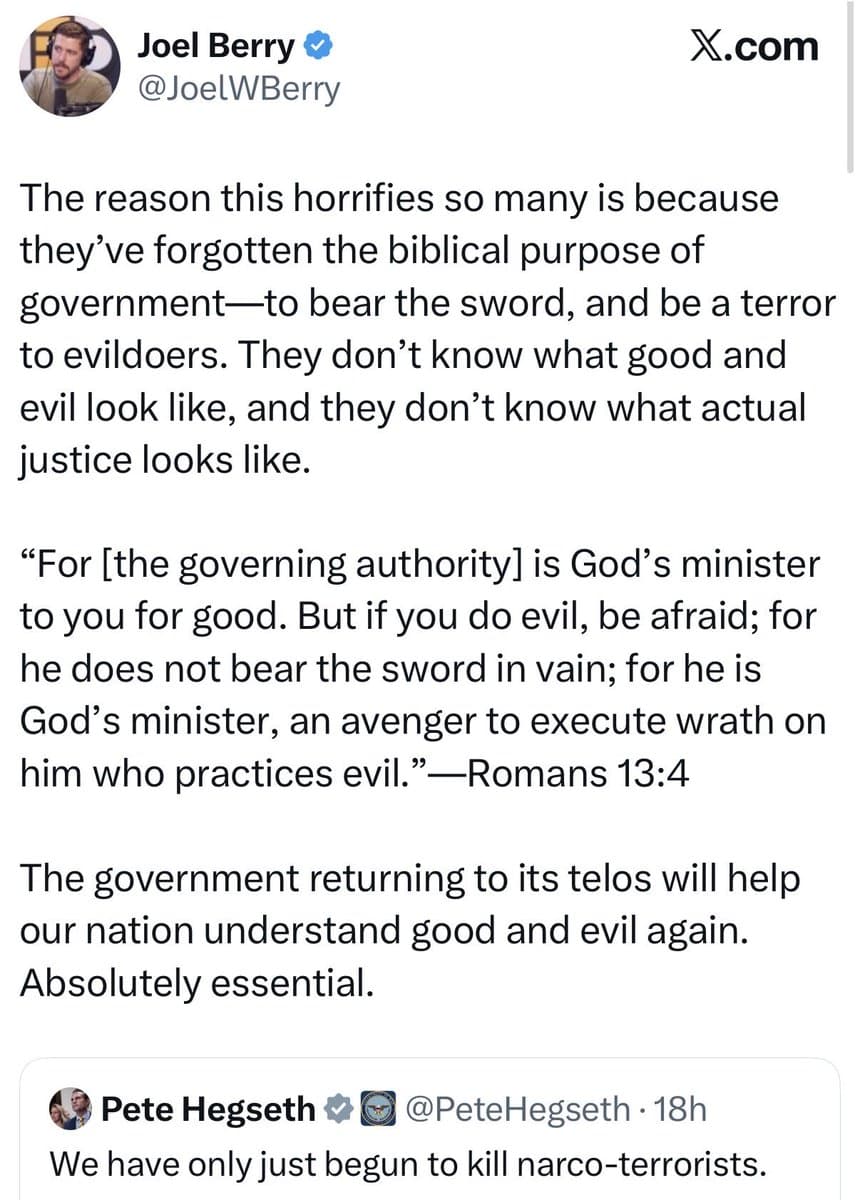
New York, NY – Prominent author and financial journalist James Surowiecki recently issued a stark warning regarding the perils of government leaders believing they are "instruments of God." His commentary, shared on social media, directly referenced a tweet by Joel Berry, managing editor of the satirical news outlet The Babylon Bee, highlighting the potential for such beliefs to undermine democratic principles.Joe Berry's tweet is a great example of why it's so dangerous for government leaders to believe they're instruments of God: it allows them to violate democratically-established laws and roles because they believe they're acting in the cause of righteousness." This statement underscores a critical debate about the intersection of faith, power, and governance in modern society.Joel Berry's referenced tweet, which has been widely discussed, reportedly featured the phrase "But we said ‘Christ is King’ on the internet!" accompanied by an image depicting individuals in hell. This post from the managing editor of the Christian satire site The Babylon Bee, known for its conservative leanings and often provocative content, sparked considerable online debate. Berry has previously drawn controversy for other social media statements, including remarks about Catholics in Gaza and a tweet that mirrored an antisemitic trope.James Surowiecki, a staff writer for The New Yorker and author of "The Wisdom of Crowds," frequently offers insights on economics, social behavior, and political dynamics. His intervention emphasizes the potential for religious conviction, when wielded by those in power, to justify actions that bypass established legal and democratic frameworks. The discussion highlights the delicate balance between personal faith and public service, particularly in secular governance.The broader implications of leaders claiming divine authority are significant, potentially leading to unchecked power and a disregard for accountability. Surowiecki's critique serves as a reminder of the historical and ongoing tensions between religious belief and secular law, urging vigilance against interpretations that could erode democratic foundations.