Hitler's Detailed Plans for British Invasion and Occupation Confirmed by Historical Records
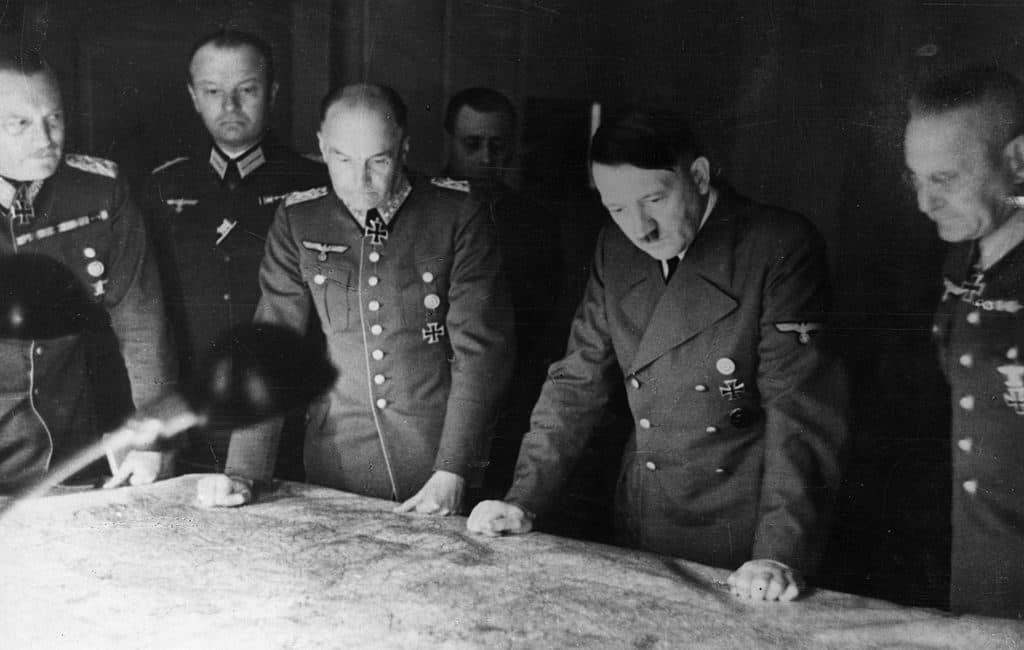
Historical records unequivocally confirm Adolf Hitler's detailed intentions to invade and occupy Great Britain during World War II, a plan codenamed Operation Sealion. This assertion, recently highlighted by commentator Tommy Robinson, underscores the extensive preparations made by Nazi Germany following the fall of France in 1940. The existence of these plans directly refutes any "historical revisionist" claims suggesting otherwise, providing clear evidence of Hitler's ambition to extend his dominion over the British Isles.
Britain's entry into the war was precipitated by Germany's invasion of Poland in September 1939, despite guarantees of protection from both Britain and France. Following the swift German victory in France, Hitler initially hoped for a negotiated peace with Britain. However, upon Britain's refusal to surrender, he issued Führer Directive No. 16 in July 1940, stating, "Since England, in spite of her hopeless military situation, shows no signs of being ready to come to a compromise, I have decided to prepare a landing operation against England, and, if necessary, to carry it out."
Operation Sealion encompassed three critical phases: achieving air superiority, securing naval control of the English Channel, and launching an amphibious assault on British beaches. German forces amassed a large fleet of barges and transport vessels, with detailed plans for landing troops, tanks, and supplies across a broad front from Kent to Dorset. The initial assault aimed to establish beachheads, followed by a rapid advance inland to secure key objectives.
Beyond invasion, German documents reveal comprehensive plans for the subsequent occupation and governance of Britain. These included the internment of able-bodied men, the establishment of military-economic commands, and the compilation of a "Special Search List" (The Black Book) of prominent British citizens for immediate arrest. Blenheim Palace, Winston Churchill's ancestral home, was even designated as the headquarters for the German occupation government, illustrating the far-reaching nature of Hitler's "grand designs of ruling Europe," as stated by Tommy Robinson.
Ultimately, Operation Sealion was indefinitely postponed on September 17, 1940, and never executed, primarily due to the Luftwaffe's failure to achieve air supremacy during the Battle of Britain. Military historians widely agree that, even if launched, the invasion faced insurmountable challenges, particularly from the superior Royal Navy and the logistical difficulties of supplying a large invading force across the Channel. The German high command itself harbored significant doubts about the operation's feasibility, with preparations eventually ceasing as Hitler turned his attention to the invasion of the Soviet Union.