Ramaswamy Advocates for Stricter Welfare Work Requirements, Citing Long-Term Benefits
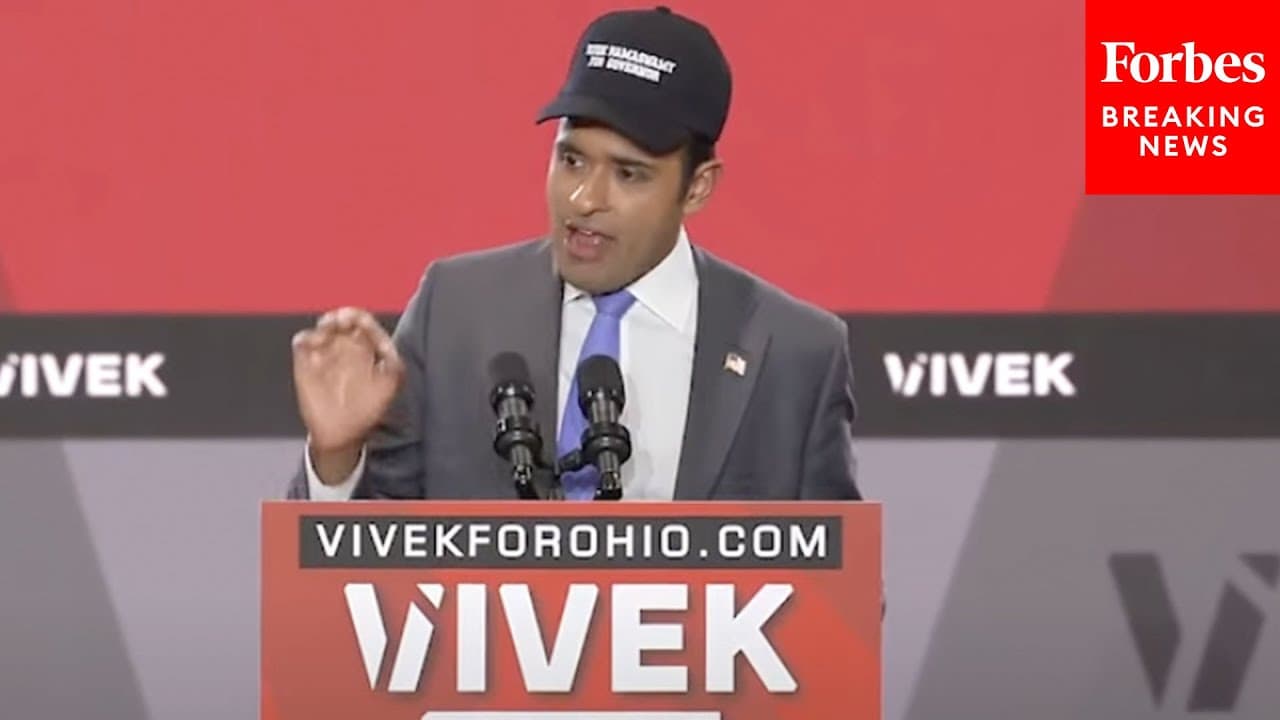
Vivek Ramaswamy, a prominent political figure, recently asserted that "common-sense work requirements for welfare recipients actually help those recipients over the long run." In a statement shared on social media, Ramaswamy emphasized his belief that "A permanent handout isn’t compassion, it’s cruelty," advocating for policies that promote independence over government reliance. His remarks align with his broader political platform, which frequently calls for reattaching work requirements to programs like Medicaid and welfare.
Ramaswamy has consistently championed the reintroduction and strengthening of work requirements, a stance he articulated during his Ohio gubernatorial campaign kickoff in February 2025. He stated, "We're going to end the war on work in America starting right here in Ohio by reattaching work requirements to Medicaid and Welfare to address the worker shortage in this state." He views such measures as a compassionate approach to help individuals achieve self-sufficiency, rather than fostering dependence.
Current U.S. policy already includes work requirements for certain welfare programs, notably the Supplemental Nutrition Assistance Program (SNAP). These include general work requirements for individuals aged 16-59 and additional stipulations for "Able-Bodied Adults Without Dependents" (ABAWDs), who face a three-month time limit on benefits if they do not meet work or work-related activity thresholds. Exemptions exist for various circumstances, such as caring for a child under six, physical or mental limitations, or participation in specific training programs.
The debate over welfare work requirements has a long history, significantly shaped by the Personal Responsibility and Work Opportunity Act (PRWORA) of 1996, which replaced Aid to Families with Dependent Children (AFDC) with Temporary Assistance for Needy Families (TANF). This reform introduced stricter work mandates and time limits, aiming to shift recipients from welfare to work. Proponents argue these requirements reduce dependency and encourage employment, while critics often raise concerns about the impact on vulnerable populations and the effectiveness of such policies in consistently leading to stable employment.
Ramaswamy's advocacy for these requirements reflects a conservative viewpoint that prioritizes individual responsibility and aims to reduce government expenditure on social safety nets. His statements underscore a belief that work is not only an economic necessity but also a pathway to personal dignity and societal contribution. The discussion around these policies continues to be a central theme in political discourse, with ongoing debates about their efficacy and humanitarian implications.