1-Million-Year-Old Yunxian Skull Redraws Human Evolutionary Tree, Linking to Denisovans
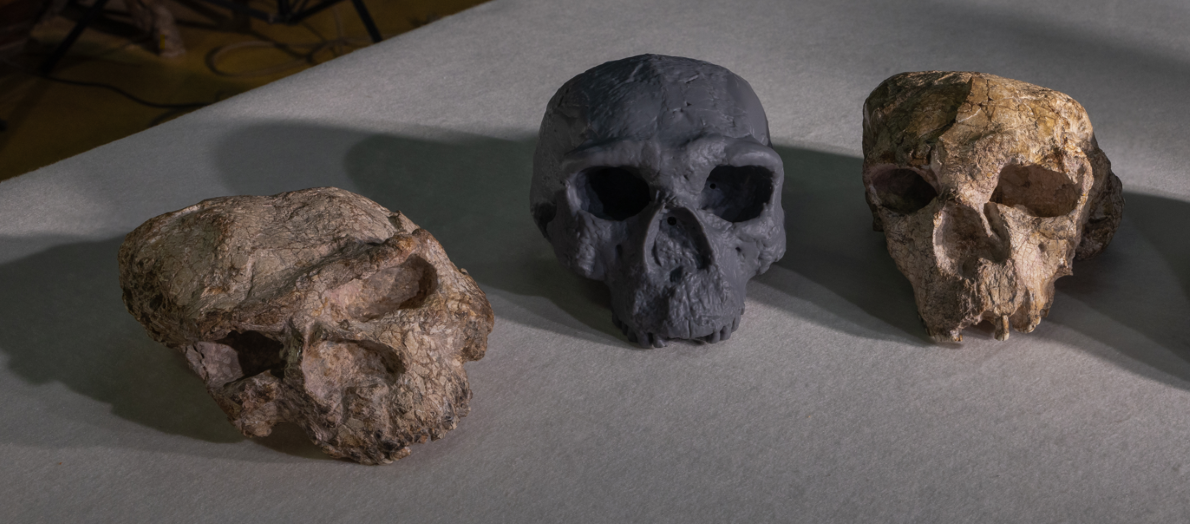
A groundbreaking re-analysis of the 1-million-year-old Yunxian 2 skull, unearthed in China's Hubei Province, is significantly altering our understanding of early human evolution in Asia. Researchers have determined that the skull, previously thought to be Homo erectus, belongs to an early branch of a sister lineage to modern humans, closely related to the enigmatic Denisovans. This finding highlights the complex morphological diversity of hominins in the region and challenges established timelines for human divergence.
The re-evaluation, utilizing sophisticated scanning and digital reconstruction techniques, revealed that the Yunxian 2 skull possesses a unique blend of primitive and derived features. Paleoanthropologist Xijun Ni, who led the study, stated that the skull appears to be the oldest known member of an evolutionary lineage that includes Homo longi and the Denisovans. This suggests that the divergence among human lineages occurred much earlier than previously believed, potentially over a million years ago.
Professor Chris Stringer of the Natural History Museum in London, a co-author of the study, emphasized the skull's significance. "It has a long, low skull and receding forehead behind a strong browridge, but the estimated brain size is the largest so far for any hominin of that age," Stringer noted, adding that the skull "may represent one of the most important windows yet into the evolutionary processes that shaped our genus around one million years ago." The discovery suggests that five major branches of large-brained humans, including Homo sapiens, Homo longi (and Denisovans), Neanderthals, Homo heidelbergensis, and Homo erectus, began diverging over a million years ago.
The findings underscore the rich and complex fossil record in East Asia, which has long presented challenges to a simplified view of human evolution. The Homo longi clade, to which Yunxian 2 is now assigned, appears to have been successful in Asia for over a million years, exhibiting considerable morphological diversity. This new understanding, combined with recent advances in Denisovan whole-genome sequencing, provides crucial data for re-evaluating existing theories on human origins and dispersal.