Climate Skeptic Willis Eschenbach Declares "End of Climate Grift," Citing Matt Ridley's Critique of Climate Science
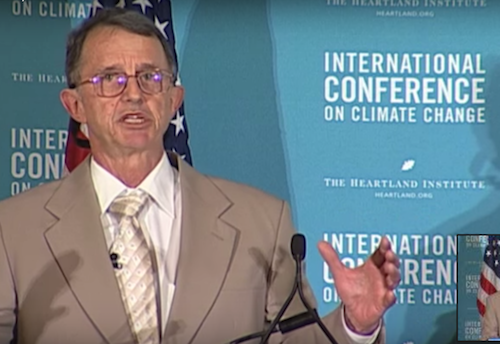
Willis Eschenbach, an independent researcher and prominent climate skeptic, recently asserted on social media that "The end of the climate grift is upon us," attributing continued adherence to mainstream climate narratives to what he termed the "Sinclair Trap." Eschenbach's tweet, posted on social media, linked to an article by author Matt Ridley, characterizing it as an "excellent article" supportive of his view.
Eschenbach, who holds a bachelor's degree in psychology, is a frequent contributor to climate denial blogs such as Watts Up With That. He has been widely criticized by climate scientists for promoting misinformation and lacking formal scientific training in the field. His views often challenge the scientific consensus on anthropogenic climate change, including claims that climate models "are running too hot" and that there is "no evidence of a climate crisis," according to SourceWatch.
The article praised by Eschenbach, identified as Matt Ridley's "What the climate wars did to science," critiques what Ridley perceives as "policy-based evidence making" and "intolerant dogmas" within climate science. Ridley, a journalist and author, argues that political support has allowed "bad ideas" to persist in science, leading to an "intolerant consensus" backed by "vested interests." He identifies as a "lukewarmer," believing climate change is real and partly man-made but unlikely to be rapid and dangerous.
The "Sinclair Trap" referenced by Eschenbach is a quote attributed to author Upton Sinclair:
"It is difficult to get a man to understand something, when his salary depends on his not understanding it." This quote, from Sinclair's 1935 book "I, Candidate for Governor: And How I Got Licked," suggests that financial incentives can prevent individuals from acknowledging inconvenient truths. Eschenbach appears to apply this principle to those who maintain what he considers a "climate grift."
Critics of Eschenbach and Ridley, including climate scientist Richard W. Erskine, have dismissed their arguments. Erskine stated that Ridley extensively quotes individuals like Eschenbach who possess "little or no scientific credibility." The broader scientific community largely refutes the notion of a "climate grift," emphasizing the overwhelming consensus on human-caused climate change and its potential impacts, viewing such claims as part of a larger climate change denial movement.