Tesla Optimus Video Highlights Advanced Toe-Box Articulation for Enhanced Locomotion
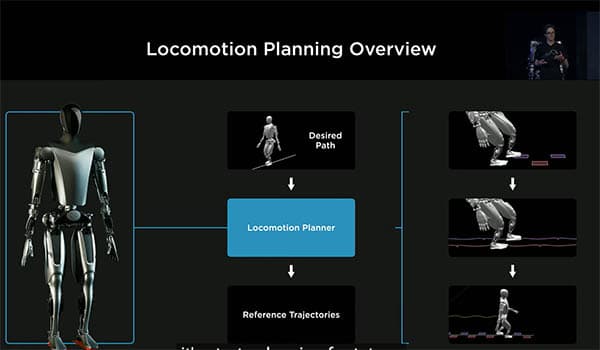
A new video released by Tesla's Optimus program showcases significant advancements in the humanoid robot's locomotion capabilities, specifically highlighting its toe-box articulation. The footage emphasizes how this design feature critically aids in the heel-to-toe transition, a movement crucial for efficient and human-like walking. This development underscores Tesla's ongoing efforts to refine Optimus's physical dexterity and balance.
The Humanoid Hub, in a recent social media post, drew attention to the innovation, stating, "> New Optimus video. Notice how the toe-box articulation aids in the heel-to-toe transition." This articulation is analogous to the human metatarsophalangeal (MTP) joint, or toe joint, which plays a vital role in supporting body weight, facilitating smooth rollover, and generating propulsive force during push-off in human gait. Research indicates that optimizing toe joint stiffness significantly improves walking efficiency and reduces overall joint torques.
Experts in robotics note that sophisticated heel-to-toe transitions are fundamental for robust bipedal locomotion, contributing to efficient damping, energy conservation, and increased walking speed. Implementing such multi-domain walking patterns, which include distinct phases like heel strike, toe strike, and ankle push-off, presents complex engineering challenges. Optimus's demonstrated toe-box articulation suggests a refined control over these intricate biomechanical movements.
This advancement positions Optimus as a contender in the rapidly evolving humanoid robotics landscape, where companies are striving for more agile and adaptable machines. Tesla has ambitious plans for mass production, with Elon Musk previously indicating a target of millions of units annually from facilities like Gigafactory Texas. Such refined locomotion capabilities are essential for Optimus to perform a wide array of tasks, from industrial applications to potential household assistance, as envisioned by the company. The continuous improvement in Optimus's gait control is a key step toward achieving these broad operational goals.